- What Are SEO Topic Clusters?
- Why SEO Topic Clusters Matter for Rankings
- 1. Stronger Topical Authority
- 2. Better Internal Linking
- 3. Improved User Experience
- 4. Reduced Keyword Cannibalization
- 5. Easier Content Planning
- How SEO Topic Clusters Work
- How to Build SEO Topic Clusters Effectively
- Choose a Core Topic
- Research Supporting Keywords
- Create a Comprehensive Pillar Page
- Publish Detailed Cluster Content
- Common Mistakes to Avoid with SEO Topic Clusters
- Weak Internal Linking
- Overlapping Content
- Thin Pillar Pages
- Ignoring Search Intent
- Measuring the Success of SEO Topic Clusters
- Final Thoughts
SEO Topic Clusters: Must-Have Strategy for Better Rankings
SEO topic clusters are one of the smartest ways to organize content for both search engines and readers. Instead of publishing isolated blog posts that compete with each other, this approach helps you build a connected content structure around a core subject. The result is better topical authority, improved internal linking, stronger user experience, and a greater chance of ranking for valuable keywords.
As search engines continue to evolve, they no longer rely only on exact-match keywords to understand a page. They now evaluate context, relevance, depth, and how pieces of content relate to one another. That is why a clustered content strategy has become such an important part of modern SEO.
What Are SEO Topic Clusters?
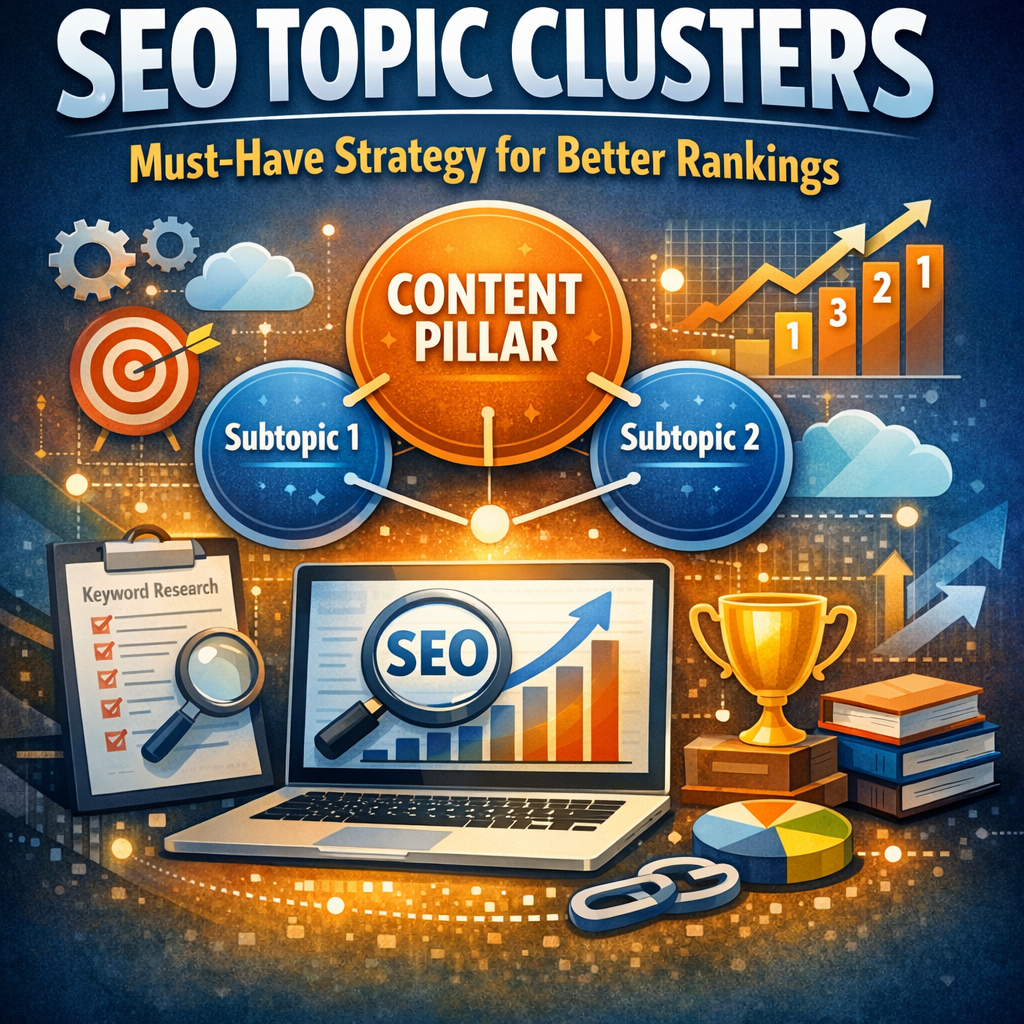
A topic cluster is a group of related content built around one broad “pillar” topic. The pillar page serves as the main resource on the subject, while several supporting articles cover specific subtopics in more detail. Each supporting page links back to the pillar page, and the pillar links to those subpages as well.
This structure creates a clear content ecosystem that helps search engines understand your site’s expertise.
For example, if your pillar topic is “email marketing,” your supporting cluster content might include:
– How to build an email list
– Best email subject lines
– Email automation tips
– A/B testing for campaigns
– Email segmentation strategies
Together, these pages tell search engines that your site covers the subject comprehensively.
Why SEO Topic Clusters Matter for Rankings
Publishing random content can still attract traffic, but it often lacks strategic direction. Topic clusters solve that problem by giving your content a logical hierarchy.
Here are some of the biggest SEO benefits:
1. Stronger Topical Authority
When your website covers a subject from multiple angles, search engines are more likely to view it as a trustworthy source. A single article may rank for a keyword, but a cluster of high-quality related content builds authority across an entire topic.
2. Better Internal Linking
Internal links are not just for navigation. They help distribute authority across your site and guide search engines toward your most important pages. Topic clusters naturally encourage meaningful internal linking rather than random links added as an afterthought.
3. Improved User Experience
A reader who lands on one article often wants to learn more. If you provide connected content on related subtopics, users stay longer, visit more pages, and engage more deeply with your site. Those signals can support stronger search performance over time.
4. Reduced Keyword Cannibalization
Without a cluster strategy, several pages may target similar terms and end up competing with one another. Topic clusters help define the purpose of each page, making it easier to target different search intents without overlap.
5. Easier Content Planning
Clusters give your editorial strategy a roadmap. Instead of constantly searching for blog ideas, you can build a planned content structure around key themes that matter to your audience and business.
How SEO Topic Clusters Work
At the center of the model is the pillar page. This page typically targets a broad, high-volume keyword and provides an overview of the topic. It does not need to cover every detail in full depth, but it should be substantial and useful.
The cluster pages are narrower in focus. They answer specific questions, target long-tail keywords, and provide detailed guidance on related subtopics.
The key is in the linking structure:
– The pillar page links to all relevant cluster pages
– Each cluster page links back to the pillar page
– Cluster pages may also link to one another when relevant
This web of connections helps search engines understand semantic relationships between pages.
How to Build SEO Topic Clusters Effectively
Creating a strong cluster strategy takes more than choosing a few related blog topics. It requires research, planning, and consistency.
Choose a Core Topic
Start with a broad topic that is important to your audience and relevant to your offerings. It should be broad enough to support several supporting articles, but specific enough to align with your niche.
Good core topics often:
– Solve a recurring audience problem
– Have meaningful search demand
– Connect to your products or services
– Allow room for multiple subtopics
Research Supporting Keywords
Once you have the main topic, identify related keywords, questions, and search intents. Look for long-tail phrases and subtopics that deserve their own pages.
Helpful sources include:
– Google search suggestions
– “People Also Ask” results
– SEO tools like Ahrefs, Semrush, or Surfer
– Competitor content
– Customer FAQs and sales conversations
Your goal is to uncover what users want to know at each stage of their journey.
Create a Comprehensive Pillar Page
The pillar page should provide a broad overview of the subject and serve as the central hub for the cluster. It should be well organized, easy to scan, and valuable enough to stand on its own.
Include:
– A clear explanation of the main topic
– Key concepts and subtopics
– Links to deeper supporting resources
– Helpful visuals, examples, or frameworks if possible
Publish Detailed Cluster Content
Each cluster article should cover one specific subtopic thoroughly. Avoid making these pages thin or repetitive. They should add genuine value and answer a focused user need.
For best results, each page should:
– Target one primary intent
– Offer practical, original information
– Include relevant internal links
– Support the overall authority of the cluster
Common Mistakes to Avoid with SEO Topic Clusters
While the strategy is powerful, poor execution can limit results. Here are some common problems to watch for:
Weak Internal Linking
If your pages are related but not properly linked, search engines may not fully understand the relationship. Make sure your linking structure is intentional and consistent.
Overlapping Content
If multiple articles cover nearly the same angle, your site can become confusing for both users and search engines. Assign each page a clear purpose before writing.
Thin Pillar Pages
A pillar page should not be just a short introduction with a list of links. It needs enough depth to establish relevance and authority on its own.
Ignoring Search Intent
Not every related keyword belongs in the same format. Some users want a guide, others want a checklist, definition, comparison, or tutorial. Match the content type to the query.
Measuring the Success of SEO Topic Clusters
After publishing your cluster, track performance over time. SEO is a long-term strategy, so results may build gradually.
Key metrics to monitor include:
– Organic traffic to the pillar and cluster pages
– Keyword rankings across the topic
– Internal click-through behavior
– Average time on page
– Number of pages per session
– Backlinks earned by the cluster
– Conversions from organic visitors
You may also notice that as cluster pages gain visibility, the pillar page becomes stronger too. That combined growth is often one of the clearest signs the strategy is working.
Final Thoughts
If your content strategy feels scattered, topic clustering can bring clarity and momentum. It helps you organize your site around meaningful themes, create stronger content relationships, and show search engines that your website offers real depth.
Rather than chasing single keywords one post at a time, think bigger. Build content ecosystems that answer related questions, guide readers naturally, and support your most important business topics. Over time, that structure can lead to stronger rankings, better engagement, and more sustainable organic growth.