- Why SEO Matters for Small Businesses
- SEO for Small Business Starts with Keyword Research
- Optimize Your Website Structure
- On-Page SEO Essentials
- Title Tags and Meta Descriptions
- Headers and Content Structure
- Internal Linking
- Image Optimization
- Create Helpful, High-Quality Content
- Local SEO for Small Business Growth
- Reviews and Reputation Matter
- Build Authority with Backlinks
- Track Results and Improve Over Time
- Common SEO Mistakes Small Businesses Should Avoid
- Final Thoughts
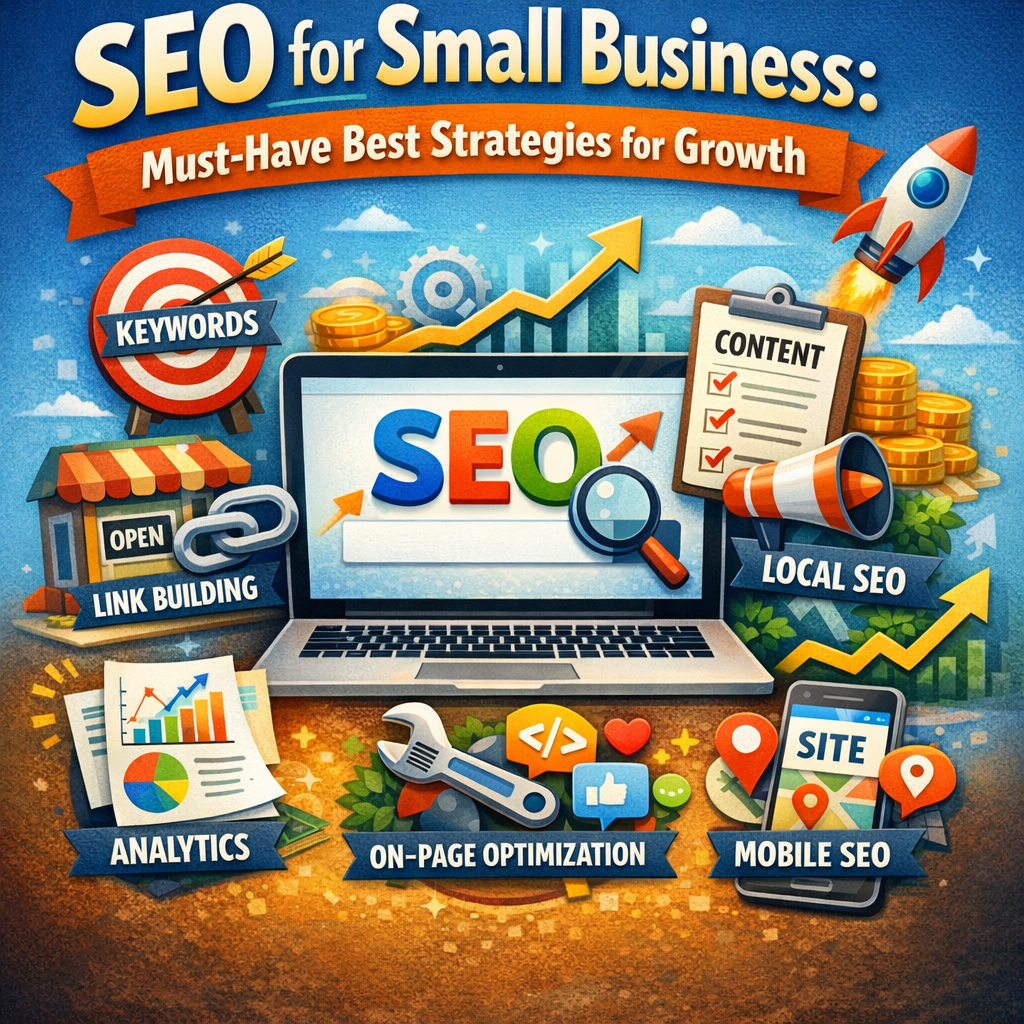
SEO for Small Business: Must-Have Best Strategies for Growth
SEO for small business is one of the most effective ways to attract local customers, build trust online, and compete with larger brands without needing a massive marketing budget. When done well, search engine optimization helps your business appear when people are actively looking for your products or services. That means more qualified traffic, more leads, and better long-term visibility.
For small businesses, SEO is not just about rankings. It is about being found by the right audience at the right time. Whether you run a local bakery, a law office, a plumbing company, or an online store, a strong SEO foundation can turn your website into a consistent source of growth.
Why SEO Matters for Small Businesses
Unlike paid advertising, SEO can keep delivering results over time. Ads stop the moment your budget runs out, but optimized content and pages can continue bringing in visitors for months or even years.
Small businesses benefit from SEO because it helps:
– Increase visibility in search engines
– Drive targeted traffic to the website
– Improve credibility and authority
– Attract local customers
– Generate leads at a lower long-term cost
Many buyers now begin their journey with Google. If your business does not appear in search results, you may be missing potential customers who are ready to take action.
SEO for Small Business Starts with Keyword Research
Before creating content or optimizing pages, you need to know what your audience is searching for. Keyword research helps you identify the phrases potential customers use when looking for solutions.
Focus on keywords that show clear intent, such as:
– “best accountant near me”
– “emergency plumber in Dallas”
– “affordable pet grooming services”
– “custom cakes for birthdays”
For small businesses, long-tail keywords are especially valuable. These phrases may have lower search volume, but they usually bring more qualified visitors because they are more specific.
Useful tools for keyword research include:
– Google Keyword Planner
– Ubersuggest
– Ahrefs
– SEMrush
– Google Search suggestions
Choose a mix of local, service-based, and informational keywords to build a balanced strategy.
Optimize Your Website Structure
A well-organized website helps both users and search engines understand your business. If your site is confusing, slow, or difficult to navigate, it can hurt rankings and reduce conversions.
Make sure your website includes:
– Clear navigation menus
– Dedicated service or product pages
– An easy-to-find contact page
– Fast loading speed
– Mobile-friendly design
– Secure browsing with HTTPS
Each page should have a clear purpose. For example, instead of placing all services on one page, create separate pages for each major offering. This improves your chances of ranking for specific searches.
On-Page SEO Essentials
On-page SEO refers to the elements you can optimize directly on your website. These details make a big difference in how search engines interpret your pages.
Key on-page SEO practices include:
Title Tags and Meta Descriptions
Your title tag should include your primary keyword and clearly explain what the page is about. The meta description should encourage users to click by highlighting value or relevance.
Headers and Content Structure
Use headings such as H2 and H3 to organize your content. This improves readability and gives search engines more context.
Internal Linking
Link related pages together across your site. This helps users explore more content and allows search engines to crawl your site more effectively.
Image Optimization
Compress images to improve load speed and add descriptive alt text. This makes your site more accessible and helps with image search visibility.
Create Helpful, High-Quality Content
Content is one of the strongest SEO tools available to small businesses. Instead of only promoting your services, create content that answers common customer questions and solves real problems.
Examples of useful content include:
– How-to guides
– Service comparison posts
– FAQs
– Local resource pages
– Case studies
– Blog articles
For example, a landscaping business could publish articles on seasonal lawn care tips, while a dental office could create content about teeth whitening options or what to expect during a first appointment.
Good content builds trust, keeps visitors on your site longer, and gives you more opportunities to rank for different search terms.
Local SEO for Small Business Growth
If your company serves a specific city or region, local SEO should be a top priority. Local search results often appear before traditional organic listings, especially on mobile devices.
To improve local visibility:
– Claim and optimize your Google Business Profile
– Keep your business name, address, and phone number consistent everywhere
– Add your business to trusted local directories
– Collect and respond to customer reviews
– Use city and neighborhood keywords naturally in your content
A complete Google Business Profile can help your business appear in map results, local packs, and branded searches. Add photos, business hours, services, and accurate contact information to make your listing more effective.
Reviews and Reputation Matter
Online reviews influence both rankings and customer decisions. A business with strong ratings and recent reviews often earns more clicks and trust than competitors with little social proof.
Encourage happy customers to leave reviews on platforms such as:
– Google
– Yelp
– Facebook
– Industry-specific review sites
Respond professionally to all reviews, including negative ones. This shows that your business values customer feedback and takes service seriously.
Build Authority with Backlinks
Backlinks are links from other websites pointing to your site. Search engines see quality backlinks as a sign that your content is trustworthy and useful.
Small businesses can earn backlinks by:
– Partnering with local organizations
– Getting featured in local news or blogs
– Writing guest posts
– Sponsoring community events
– Creating useful resources others want to share
Focus on quality over quantity. A few relevant backlinks from trusted sites are more valuable than many low-quality links.
Track Results and Improve Over Time
SEO is not a one-time project. It is an ongoing process that requires tracking, testing, and updates.
Use tools like:
– Google Analytics
– Google Search Console
– Google Business Profile insights
Pay attention to metrics such as:
– Organic traffic
– Keyword rankings
– Click-through rates
– Bounce rates
– Leads and conversions
By reviewing performance regularly, you can identify what is working and where improvements are needed. Updating old content, improving underperforming pages, and refining keyword targeting can lead to steady progress.
Common SEO Mistakes Small Businesses Should Avoid
Some businesses hurt their results by making avoidable mistakes, such as:
– Stuffing keywords unnaturally
– Ignoring mobile optimization
– Using duplicate content
– Neglecting local listings
– Publishing thin or low-value pages
– Forgetting to update website information
The goal is to create a site that is useful, trustworthy, and easy to navigate. Search engines reward businesses that focus on user experience.
Final Thoughts
Small businesses do not need enormous budgets to succeed online. With the right strategy, SEO can become a powerful engine for visibility, trust, and long-term customer growth. Start with strong keyword research, optimize your website, create valuable content, strengthen your local presence, and monitor your results consistently.
The businesses that win in search are often the ones that stay patient, stay helpful, and keep improving over time. If you invest in the basics and build from there, your website can become one of your most valuable marketing assets.