- What Is SEO Keyword Clustering?
- Why Keyword Clustering Matters for SEO
- 1. Better topical authority
- 2. Higher ranking potential
- 3. Stronger site structure
- 4. Improved user experience
- 5. Reduced keyword cannibalization
- How SEO Keyword Clustering Works
- Start with a core topic
- Gather related keywords
- Analyze search intent
- Group keywords by similarity
- Map clusters to content
- Optimize naturally
- SEO Keyword Clustering and Search Intent
- Best Practices for Building Effective Keyword Clusters
- Focus on topics, not just terms
- Use one primary keyword and multiple secondary keywords
- Create depth, not fluff
- Support clusters with internal links
- Update old content
- Common Mistakes to Avoid
- Final Thoughts
SEO Keyword Clustering: Must-Have Strategy for Better Rankings
SEO keyword clustering is one of the smartest ways to build content that ranks for more than just a single search term. Instead of creating isolated pages for every keyword variation, this approach helps you group related terms by search intent and organize your content in a way that search engines understand more clearly. The result is a stronger site structure, better topical relevance, and more opportunities to appear in search results.
If your content strategy still revolves around targeting one keyword per page, you may be missing out on valuable traffic. Search engines have become much better at understanding context, meaning, and user intent. That means modern SEO is less about exact-match terms and more about building comprehensive, useful content around related keyword themes.
What Is SEO Keyword Clustering?
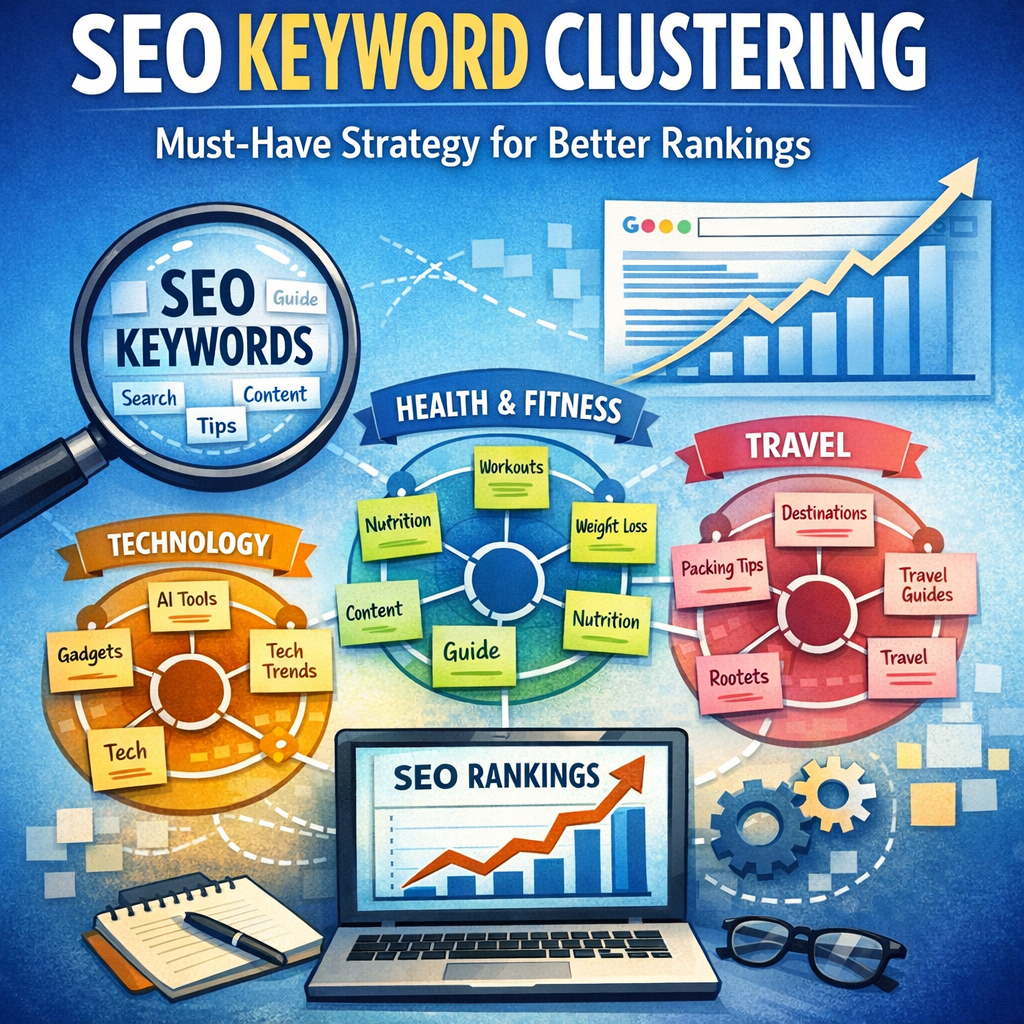
SEO keyword clustering is the process of grouping similar or closely related keywords together based on intent, topic, and search behavior. Rather than treating each keyword as a separate target, you organize them into clusters that can often be addressed within one page or content hub.
For example, if you are writing about email marketing, you might group together keywords like:
– email marketing strategy
– best email marketing tips
– how to improve email open rates
– email campaign optimization
These keywords are different, but they all connect to the same broader topic. Instead of writing four thin articles, you could create one strong, well-structured piece that answers all of those related queries.
This helps search engines see your page as authoritative and comprehensive, which can improve rankings across multiple terms.
Why Keyword Clustering Matters for SEO
Search engines no longer rely only on exact keywords to determine relevance. Algorithms now analyze meaning, relationships between terms, and the overall quality of content. That is why keyword clustering has become a key SEO strategy.
Here are some of the biggest benefits:
1. Better topical authority
When your content covers a complete subject instead of a narrow phrase, your website appears more trustworthy and useful. This can improve your authority in a niche over time.
2. Higher ranking potential
A single well-optimized page can rank for dozens or even hundreds of related keywords. That gives you more visibility without needing to create unnecessary duplicate content.
3. Stronger site structure
Keyword clusters naturally support content hubs, pillar pages, and internal linking. This makes your website easier for users and search engines to navigate.
4. Improved user experience
Visitors do not want to jump between multiple pages to find answers to closely related questions. Clustering allows you to provide fuller, more satisfying content in one place.
5. Reduced keyword cannibalization
If you create too many pages targeting nearly identical search terms, those pages can compete with each other. Clustering helps avoid that problem by consolidating similar intent into fewer, stronger pages.
How SEO Keyword Clustering Works
The process begins with keyword research, but it goes far beyond building a basic list. The goal is to understand how keywords connect and which ones belong together.
Here is a simple step-by-step approach:
Start with a core topic
Choose a broad subject that matters to your audience and aligns with your business or website goals.
Gather related keywords
Use SEO tools such as Google Keyword Planner, Ahrefs, Semrush, Ubersuggest, or Google Search Console to collect related terms, questions, and long-tail variations.
Analyze search intent
Look at what users actually want when they search those phrases. Are they trying to learn something, compare options, or make a purchase? Keywords with the same intent usually belong in the same cluster.
Group keywords by similarity
Organize terms that have overlapping meaning or lead to similar search results. This is where clusters begin to form.
Map clusters to content
Decide whether each cluster should become:
– a new article
– a section within a larger page
– a pillar page with supporting posts
– a product or service page
Optimize naturally
Use the primary keyword in key areas like headings, title tags, and meta descriptions, but include related terms throughout the content in a natural, helpful way.
SEO Keyword Clustering and Search Intent
One of the most important parts of clustering is understanding intent. Two keywords may look similar but deserve separate pages if the user goal is different.
For instance:
– “best project management tools” suggests comparison intent
– “what is project management software” suggests informational intent
– “buy project management software” suggests transactional intent
Even though these phrases are related, they may not belong in the same content piece. Good clustering is not just about matching words. It is about matching purpose.
This is why reviewing search engine results pages can be helpful. If Google shows very similar results for two keywords, they can likely be clustered together. If the results are very different, separate content may be the better option.
Best Practices for Building Effective Keyword Clusters
To make this strategy work well, keep these best practices in mind:
Focus on topics, not just terms
Think bigger than individual keywords. Build content around complete subjects your audience cares about.
Use one primary keyword and multiple secondary keywords
Every page should still have a clear main target, but related keywords should support it naturally.
Create depth, not fluff
Clustering is not about stuffing as many phrases as possible into one page. It is about covering a topic thoroughly and meaningfully.
Support clusters with internal links
If you have a pillar page and supporting articles, link them together. This reinforces topic relationships and helps users explore further.
Update old content
You do not always need new pages. Often, older articles can be expanded and reorganized to target clusters more effectively.
Common Mistakes to Avoid
Many websites attempt clustering but make avoidable errors that limit results.
One common mistake is grouping keywords only by wording instead of intent. Another is forcing unrelated terms into the same page just to capture more traffic. Some also create overly broad pages that lack focus, making it harder to rank well.
It is also important not to ignore content quality. Keyword clustering is a strategic framework, but it only works when paired with useful, well-written content that genuinely answers user questions.
Final Thoughts
SEO success today depends on relevance, structure, and depth. Keyword clustering supports all three. By grouping related search terms and creating content around meaningful topic clusters, you can rank for more queries, build stronger authority, and offer a better experience to your audience.
Whether you run a blog, business website, or e-commerce platform, this strategy can help you move beyond outdated one-keyword targeting. Done properly, it turns scattered keyword research into a focused content plan that is easier to scale and more likely to drive long-term organic growth.
If you want better rankings without creating endless low-value pages, keyword clustering is a strategy worth making part of your SEO foundation.