- What Makes Growth Hacking Different?
- Core Principles Behind Effective Growth Hacking Strategies
- 1. Data Comes First
- 2. Speed Matters
- 3. The Full Funnel Matters
- 4. Creativity Drives Results
- Growth Hacking Strategies for Faster Customer Acquisition
- Build High-Converting Landing Pages
- Use Content as a Growth Engine
- Leverage Referral Loops
- How to Improve Activation and Early Engagement
- Reduce Friction During Onboarding
- Personalize the First Experience
- Retention: The Most Overlooked Growth Lever
- Growth Hacking Strategies for Better Retention
- Create Habit-Forming Experiences
- Use Lifecycle Email Campaigns
- Collect Feedback and Act on It
- Product-Led Growth Tactics That Multiply Results
- Embed Sharing Into the Product
- Offer Freemium or Trial Access
- Testing and Optimization: Where Real Wins Happen
- Common Mistakes to Avoid
- Final Thoughts
Growth Hacking Strategies: Must-Have Tactics for Effortless Success
Growth hacking strategies help businesses grow faster by combining creativity, data, testing, and smart execution. Instead of relying only on traditional marketing, this approach focuses on finding efficient, low-cost ways to attract users, increase conversions, and improve retention. Whether you are building a startup, scaling an online brand, or trying to boost customer engagement, the right tactics can create momentum without wasting time or budget.
Modern companies operate in a crowded digital space, which means attention is limited and competition is constant. That is why growth-focused teams look for repeatable systems that deliver measurable results. The best part is that you do not always need a massive budget to create meaningful traction. You need the right experiments, a deep understanding of your audience, and a willingness to optimize every stage of the customer journey.
What Makes Growth Hacking Different?
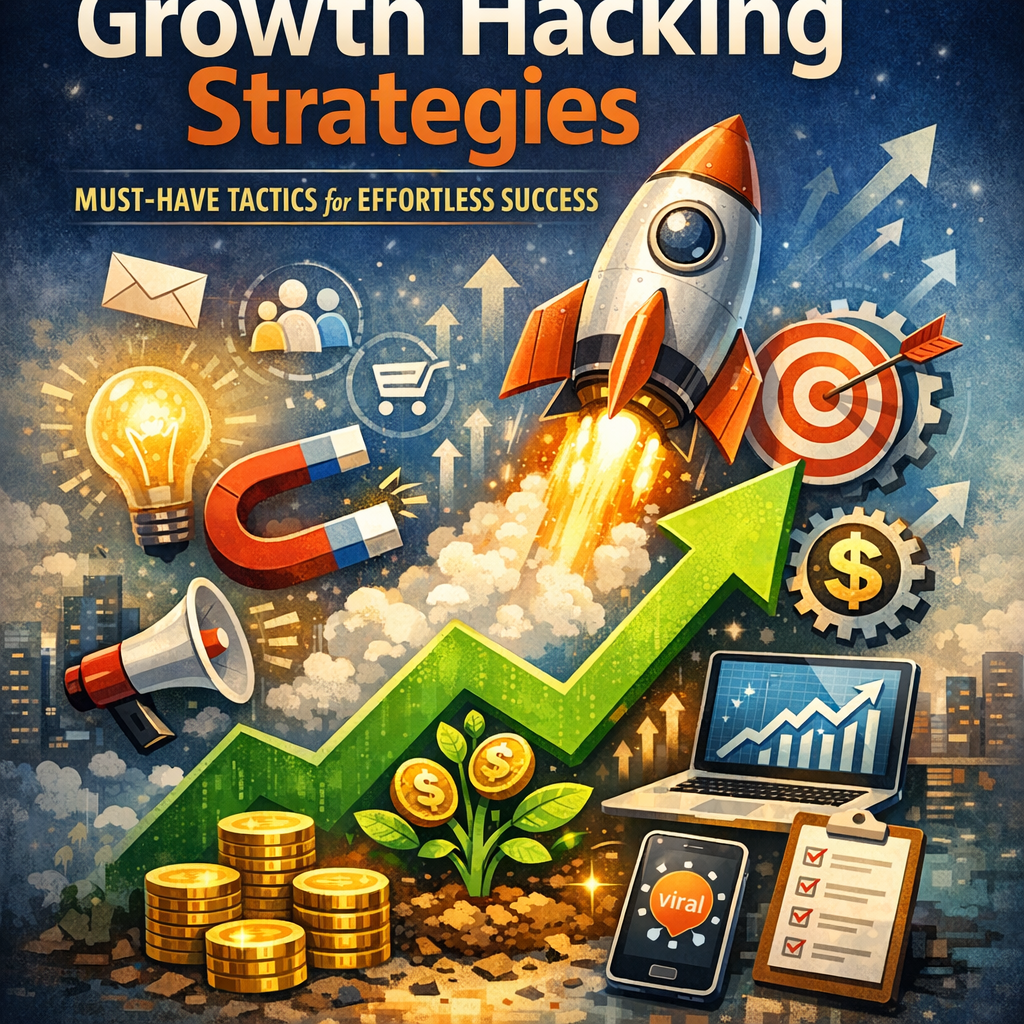
Growth hacking is not just another word for marketing. Traditional marketing often emphasizes long-term brand awareness through large campaigns, while growth hacking is more experimental and performance-driven. It is centered on rapid testing, finding loopholes in customer behavior, and improving growth metrics as efficiently as possible.
A growth hacker looks at every touchpoint and asks important questions:
– How can we get more people to discover the product?
– What will make them sign up faster?
– Why are users dropping off?
– What small changes can improve conversion rates?
– How can satisfied customers bring in more customers?
This mindset turns growth into a process rather than a one-time campaign.
Core Principles Behind Effective Growth Hacking Strategies
Before jumping into tactics, it is important to understand the principles that support strong execution.
1. Data Comes First
Successful teams do not rely on assumptions. They study analytics, customer behavior, and engagement patterns before making decisions. If a landing page has low conversions, the next step is not guessing—it is testing.
2. Speed Matters
Growth is often the result of quick iteration. Instead of waiting months to launch a perfect campaign, growth-minded companies test small ideas rapidly, keep what works, and drop what does not.
3. The Full Funnel Matters
Attracting traffic is only one piece of the puzzle. Real progress happens when acquisition, activation, retention, referral, and revenue all work together.
4. Creativity Drives Results
Some of the best wins come from unusual ideas. Smart partnerships, viral hooks, interactive tools, and product-led referrals often outperform generic ad campaigns.
Growth Hacking Strategies for Faster Customer Acquisition
Acquiring new users is one of the first priorities for any growing business, but doing it efficiently is the challenge.
Build High-Converting Landing Pages
A landing page should have one clear goal. Remove distractions, write a strong value proposition, and include a compelling call to action. Small changes such as simplifying the form, improving headlines, or adding social proof can significantly increase conversions.
Key elements of a strong landing page include:
– A clear and benefit-driven headline
– Concise supporting copy
– Testimonials or trust badges
– One obvious next step
– Mobile-friendly design
Use Content as a Growth Engine
Helpful content attracts qualified traffic over time. Blog posts, guides, case studies, videos, and downloadable resources can bring in users who are actively searching for solutions.
Focus on content that answers specific pain points. Educational content performs especially well because it builds trust before the sale. When paired with search engine optimization, content becomes a long-term acquisition channel.
Leverage Referral Loops
One of the most powerful ways to grow is to make users part of your acquisition strategy. Referral programs reward customers for inviting friends, colleagues, or followers. This works best when the incentive benefits both sides.
The key is simplicity. If the process is confusing, people will ignore it. If it is fast, rewarding, and easy to share, it can generate compounding results.
How to Improve Activation and Early Engagement
Getting users to sign up is not enough. If they do not experience value quickly, they will leave.
Reduce Friction During Onboarding
Every extra step in the onboarding process increases the chance of drop-off. Ask only for essential information, guide new users clearly, and help them reach a small win as early as possible.
For example, a software platform should help users complete a meaningful task in the first session. An ecommerce store should make browsing and checkout effortless. Fast value builds confidence.
Personalize the First Experience
Not all users join for the same reason. Segmenting users based on interests, goals, or source of traffic allows you to tailor the onboarding journey. Personalized email sequences, product walkthroughs, and recommendations can dramatically improve activation.
Retention: The Most Overlooked Growth Lever
Many businesses focus heavily on acquisition while ignoring retention. That is a costly mistake. Keeping existing users engaged is usually more profitable than constantly chasing new ones.
Growth Hacking Strategies for Better Retention
Retention improves when customers continue to see value over time. Here are some effective methods:
Create Habit-Forming Experiences
People come back when your product becomes part of their routine. This can be encouraged through useful notifications, recurring value, progress tracking, or personalized recommendations.
Use Lifecycle Email Campaigns
Well-timed emails can welcome new users, re-engage inactive ones, and encourage upgrades. Instead of sending generic messages, match content to user behavior.
Examples include:
– Welcome emails for new signups
– Tips based on product usage
– Reminders for abandoned carts
– Re-engagement campaigns for dormant users
Collect Feedback and Act on It
Retention improves when businesses listen. Short surveys, in-app feedback forms, and customer interviews can reveal where users get stuck. Once those issues are identified, teams can optimize the experience based on real behavior, not assumptions.
Product-Led Growth Tactics That Multiply Results
In many cases, the product itself can drive expansion. This is one of the most efficient ways to scale.
Embed Sharing Into the Product
If users naturally invite others as part of the core experience, growth becomes built in. Collaboration features, public-facing content, team access, and social sharing options can all create organic exposure.
Offer Freemium or Trial Access
Free access lowers the barrier to entry and lets users experience value before committing. This model works especially well when there is a natural upgrade path tied to usage, features, or team size.
The goal is to remove hesitation while making the premium offer feel like a logical next step.
Testing and Optimization: Where Real Wins Happen
No tactic works forever, and no audience behaves exactly as expected. That is why testing should be ongoing.
A/B testing can help improve:
– Headlines
– Calls to action
– Pricing pages
– Email subject lines
– Signup flows
– Ad creatives
Even small gains can have a major impact when applied across a full funnel. A 10% lift in conversion rate, retention, or referral activity can create substantial overall growth.
Common Mistakes to Avoid
While experimentation is valuable, not every shortcut leads to sustainable results. Watch out for these common mistakes:
– Chasing vanity metrics instead of revenue or retention
– Copying competitors without understanding your audience
– Ignoring product quality while focusing only on promotion
– Running too many tests without a clear hypothesis
– Neglecting customer support and user experience
The best growth systems are built on real value. Clever tactics can attract attention, but only a strong product and customer-focused experience can maintain momentum.
Final Thoughts
Sustainable growth rarely comes from luck. It comes from testing smart ideas, learning quickly, and improving every stage of the customer journey. The most effective teams combine creativity with analytics and stay focused on what truly moves the business forward.
If used correctly, growth hacking strategies can help companies unlock new audiences, increase conversions, and build stronger customer loyalty without relying on oversized budgets. Start with one area, test consistently, and let real data guide your next move. Over time, those small wins can turn into remarkable progress.