- What Is a Content Repurposing Strategy?
- Why a Content Repurposing Strategy Matters
- 1. Saves Time and Resources
- 2. Reaches People Where They Are
- 3. Reinforces Key Messages
- 4. Improves SEO and Traffic Opportunities
- 5. Extends Content Lifespan
- How to Build an Effective Repurposing Workflow
- Start With Pillar Content
- Identify Repurposable Elements
- Match the Format to the Platform
- Best Content Types to Repurpose
- Evergreen Guides
- High-Traffic Blog Posts
- Webinars and Live Sessions
- Customer Stories and Case Studies
- FAQs and How-To Content
- Simple Examples of Repurposing in Action
- Example 1: Blog Post to Multi-Channel Campaign
- Example 2: Podcast Episode to Social Series
- Example 3: Webinar to Lead Magnet Funnel
- Common Mistakes to Avoid
- Posting the Same Thing Everywhere
- Ignoring Performance Data
- Overlooking Brand Consistency
- Repurposing Weak Content
- Tools That Make Repurposing Easier
- Final Thoughts
Content Repurposing Strategy: Must-Have Guide for Effortless Growth
Content repurposing strategy is one of the smartest ways to get more value from every piece of content you create. Instead of constantly starting from scratch, you can take a blog post, video, podcast, or webinar and transform it into multiple formats that reach different audiences across different platforms. This saves time, extends the lifespan of your work, and helps you grow without multiplying your workload.
If you are publishing content regularly but feel like it disappears too quickly, repurposing can change that. A well-planned approach lets you work more efficiently, stay visible longer, and maintain a consistent brand presence without burning out.
What Is a Content Repurposing Strategy?
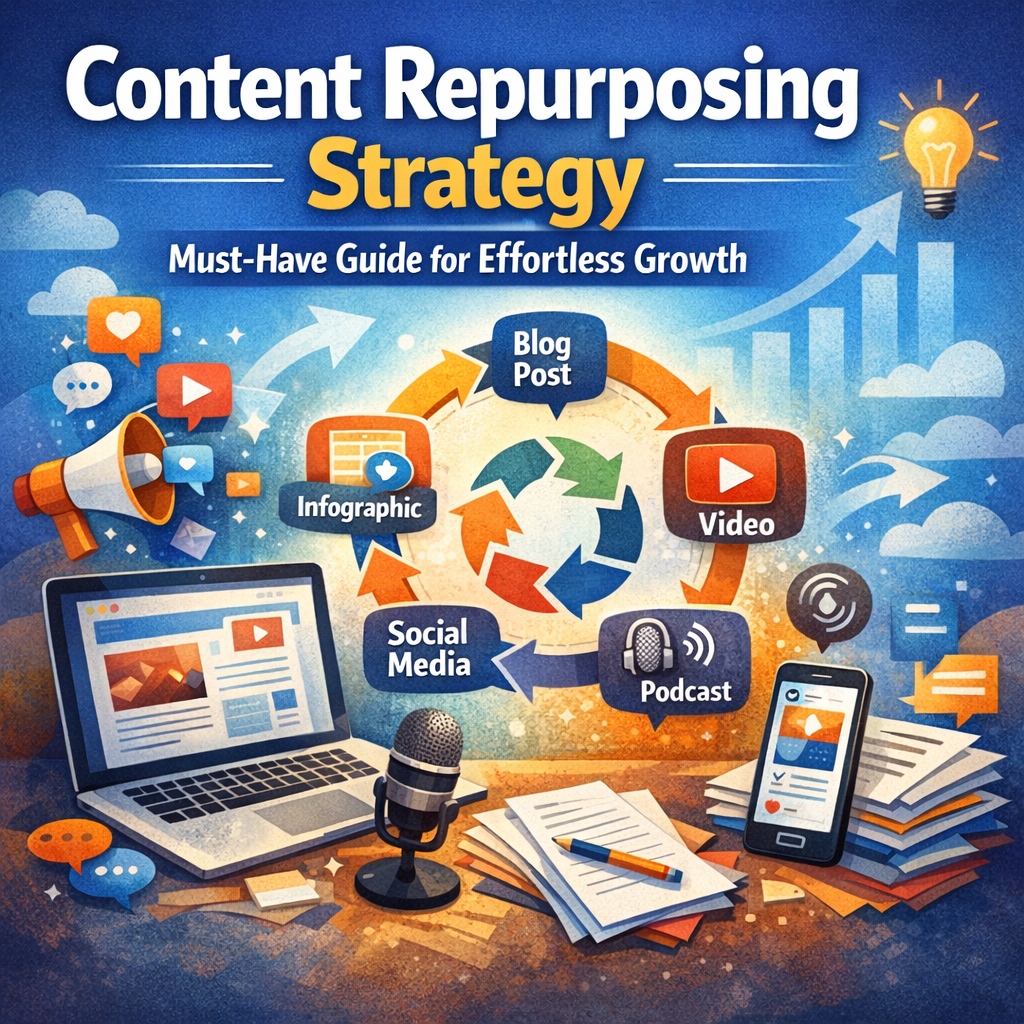
A content repurposing strategy is a system for taking existing content and adapting it into new formats, channels, or angles. The goal is not to duplicate the same material everywhere word for word. Instead, it is about reshaping the core idea so it fits the platform and audience behavior.
For example, one in-depth article can become:
– A LinkedIn post with key takeaways
– A short video for social media
– An email newsletter
– An infographic
– A podcast discussion
– A carousel post for Instagram
– A series of short-form tips for X or Threads
This approach helps you maximize the return on the time, research, and creativity already invested in your original piece.
Why a Content Repurposing Strategy Matters
Many brands focus only on creating new content. While fresh content is important, relying on it alone can be exhausting and inefficient. A strong content repurposing strategy offers several major benefits.
1. Saves Time and Resources
Creating quality content takes planning, writing, editing, design, and promotion. Repurposing lets you stretch one idea into several assets, reducing the pressure to constantly produce something entirely new.
2. Reaches People Where They Are
Not everyone consumes content the same way. Some people read blog posts, while others prefer videos, podcasts, or quick social posts. Repurposing helps you meet your audience on the platforms they actually use.
3. Reinforces Key Messages
Most people do not see everything you publish. Repeating your ideas in new formats improves visibility and strengthens brand recall without feeling repetitive.
4. Improves SEO and Traffic Opportunities
Repurposed content can drive more traffic back to your main website. A video summary can lead viewers to a full guide, and short-form social content can spark clicks to long-form resources. This creates more entry points into your content ecosystem.
5. Extends Content Lifespan
A great article should not only perform for a week and then disappear. Repurposing keeps your strongest ideas active and useful for much longer.
How to Build an Effective Repurposing Workflow
A successful system starts with planning. Repurposing should not be an afterthought. It works best when it is built into your content process from the beginning.
Start With Pillar Content
Pillar content is a strong, comprehensive piece built around a central topic. This can be:
– A long-form blog post
– A podcast episode
– A webinar
– A YouTube video
– A research report
– A case study
Because these pieces are rich in information, they are ideal for breaking down into smaller assets.
Identify Repurposable Elements
Look at your existing content and ask:
– What key points can stand alone?
– Are there statistics, quotes, or steps that can be turned into graphics?
– Can a section become a social media thread?
– Would this idea work as a short script for video?
– Could the topic be expanded into an email series?
When you review content this way, you start seeing every asset as a source of multiple opportunities.
Match the Format to the Platform
Each platform has its own style. A direct copy-and-paste approach usually falls flat. Instead, adapt the tone and structure to fit the space.
For example:
– Blog post to LinkedIn: Turn the main lesson into a professional insight post
– Podcast to Instagram: Pull a quote and pair it with a branded visual
– Webinar to email: Extract a practical takeaway and invite readers to watch the replay
– Article to video: Summarize the top three points with a clear hook and call to action
The message may stay consistent, but the presentation should change.
Best Content Types to Repurpose
Not every piece of content deserves equal attention. Focus first on content that already shows strong performance or has evergreen value.
Here are the best candidates:
Evergreen Guides
Timeless educational content can be reused for months or even years with occasional updates.
High-Traffic Blog Posts
If a post is already attracting visitors, repurposing it can amplify that momentum.
Webinars and Live Sessions
These often contain a lot of useful insights that can be sliced into clips, transcripts, summaries, and highlight posts.
Customer Stories and Case Studies
These can become testimonial graphics, short videos, sales enablement material, and social proof content.
FAQs and How-To Content
Questions your audience asks repeatedly are perfect for short-form repurposed content.
Simple Examples of Repurposing in Action
To make the process clearer, here are a few practical examples.
Example 1: Blog Post to Multi-Channel Campaign
A 2,000-word blog post can become:
– 5 short LinkedIn posts
– 1 email newsletter
– 3 Instagram carousel posts
– 1 YouTube short
– 10 quote graphics
– 1 checklist PDF
Example 2: Podcast Episode to Social Series
A 30-minute podcast can become:
– A written article recap
– 4 audiograms
– A key insights email
– A thread with major lessons
– A short reel with a strong clip
Example 3: Webinar to Lead Magnet Funnel
A webinar can be turned into:
– A gated replay page
– A blog summary
– A slide deck on LinkedIn
– A downloadable worksheet
– A follow-up email nurture sequence
This is how one core asset can support awareness, engagement, and conversion.
Common Mistakes to Avoid
Repurposing is powerful, but only when done thoughtfully. Avoid these common issues:
Posting the Same Thing Everywhere
Audiences expect content that feels native to the platform. Adjust the format, length, and tone.
Ignoring Performance Data
Track what works. If a blog topic performs well, repurpose it more aggressively. If a format falls flat, refine it.
Overlooking Brand Consistency
Even when content is adapted, your voice, visuals, and message should still feel cohesive.
Repurposing Weak Content
Do not waste effort recycling content that was unclear, outdated, or low-value to begin with. Start with your best material.
Tools That Make Repurposing Easier
You do not need a huge team to do this well. A few tools can make the process much smoother:
– Content planning tools: Trello, Notion, Asana
– Design tools: Canva, Adobe Express
– Video editing tools: CapCut, Descript
– Social scheduling tools: Buffer, Hootsuite, Later
– SEO tools: Ahrefs, Semrush, Google Search Console
The best tool stack is the one that fits your workflow and keeps the process consistent.
Final Thoughts
A smart content repurposing strategy helps you do more with less. It reduces content pressure, increases visibility, and allows your best ideas to work harder across multiple channels. Instead of chasing endless new content, you can build a sustainable system that turns one strong idea into many meaningful touchpoints.
The key is to start with valuable core content, adapt it intentionally for each platform, and keep refining based on performance. When done well, repurposing is not just a time-saving tactic. It becomes a growth engine that supports reach, trust, and long-term momentum.