- What Is a Content Marketing Funnel?
- Why the Content Marketing Funnel Matters
- Stages of the Content Marketing Funnel
- 1. Top of Funnel: Build Awareness
- 2. Middle of Funnel: Nurture Interest
- 3. Bottom of Funnel: Drive Conversions
- How to Build a Content Marketing Funnel That Works
- Understand Your Audience
- Match Content to Intent
- Create Clear Next Steps
- Measure Funnel Performance
- Common Content Funnel Mistakes to Avoid
- Final Thoughts
Content Marketing Funnel: Must-Have Guide for Better Results
Content marketing funnel strategy helps businesses turn casual readers into loyal customers by guiding people through each stage of the buying journey. Instead of creating random blog posts, videos, or emails, a funnel-based approach gives every piece of content a purpose. It helps you attract attention, build trust, answer objections, and encourage action at the right time.
Many brands invest heavily in content but still struggle to see results. The reason is often simple: they focus on creating more content instead of creating the right content for the right audience. When you understand how a funnel works, your marketing becomes more targeted, efficient, and measurable.
What Is a Content Marketing Funnel?
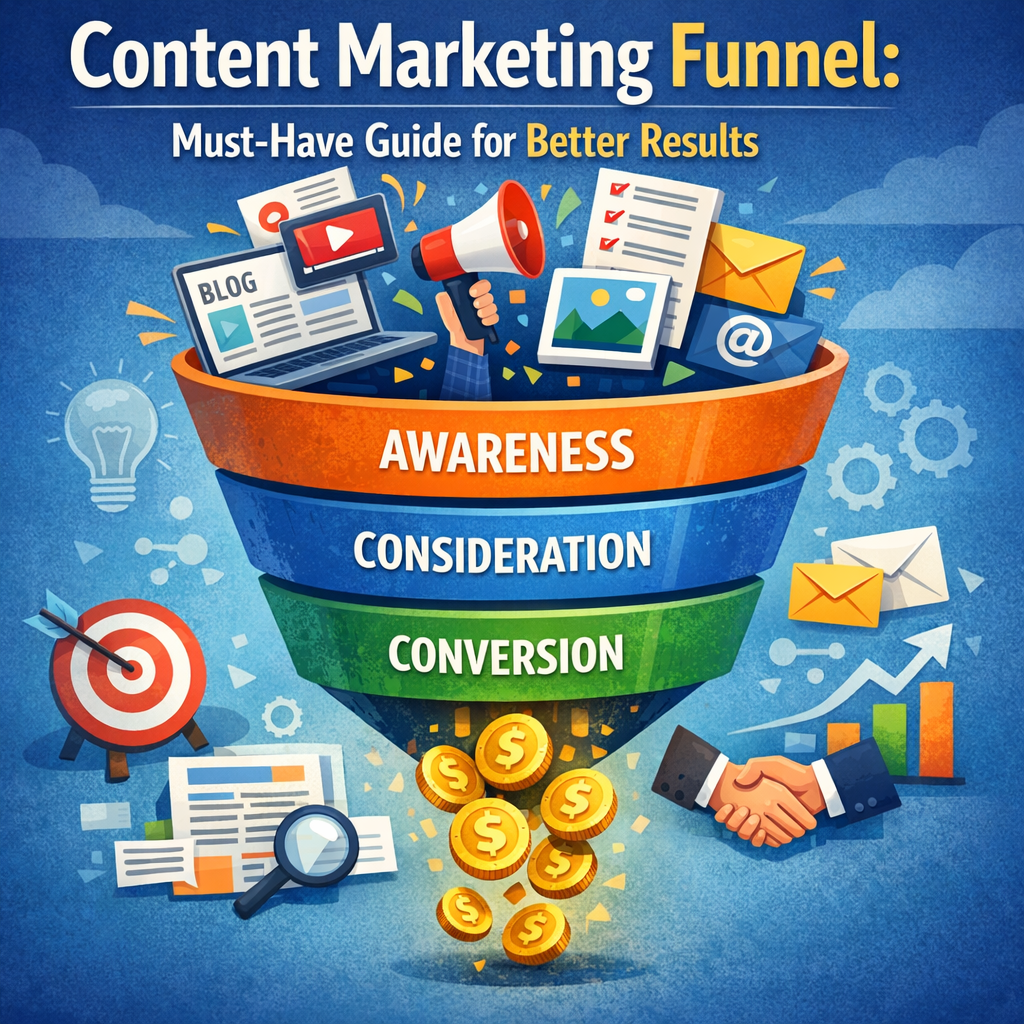
A content marketing funnel is a framework that maps content to different stages of the customer journey. It is called a “funnel” because the audience usually narrows as people move from awareness to conversion. At the top, many people discover your brand. In the middle, a smaller group starts considering your solution. At the bottom, the most interested prospects are ready to buy.
The funnel is often divided into three main stages:
– Top of Funnel (TOFU): Awareness
– Middle of Funnel (MOFU): Consideration
– Bottom of Funnel (BOFU): Conversion
Each stage requires a different type of message. Someone who just found your brand usually does not want a sales pitch right away. They need useful, relevant information first. As trust grows, your content can become more specific and action-oriented.
Why the Content Marketing Funnel Matters
Without a clear funnel, content efforts can feel disconnected. You might publish educational blog posts but never guide readers toward the next step. Or you may promote offers too early and lose potential leads before they are ready.
A strong funnel helps you:
– Reach the right audience at the right time
– Improve lead quality
– Increase engagement and trust
– Support the sales process
– Measure performance more effectively
– Turn content into a revenue-driving asset
It also creates a better customer experience. People do not want to be rushed. They want answers, clarity, and confidence before making a decision. Funnel-based content respects that journey.
Stages of the Content Marketing Funnel
1. Top of Funnel: Build Awareness
At the awareness stage, your audience is looking for information, not necessarily a product. They may have a problem, a goal, or a question, but they are still exploring options.
Your goal here is to attract attention and provide value.
Best content types for TOFU:
– Blog posts
– Social media content
– Short videos
– Infographics
– Educational guides
– Podcasts
– Search-optimized articles
This content should be helpful, easy to understand, and focused on the audience’s pain points. Avoid aggressive selling. Instead, aim to become a trusted resource.
For example, if you sell project management software, a top-of-funnel article might explain how to improve team productivity or reduce missed deadlines.
2. Middle of Funnel: Nurture Interest
At the consideration stage, people understand their problem and are comparing possible solutions. They are more engaged and willing to spend time evaluating options.
Your goal here is to build trust and show how your brand can help.
Best content types for MOFU:
– Email sequences
– Case studies
– Webinars
– Comparison guides
– Expert interviews
– Downloadable templates
– In-depth whitepapers
This is the stage where you can begin connecting problems to your solution more directly. Show your expertise, answer common objections, and help prospects make informed decisions.
A strong middle-funnel strategy often includes lead magnets and email nurturing. Once someone downloads a resource or signs up for a webinar, you can continue the conversation with content tailored to their needs.
3. Bottom of Funnel: Drive Conversions
At the conversion stage, prospects are close to making a decision. They want reassurance, proof, and a clear path to action.
Your goal here is to remove friction and encourage the final step.
Best content types for BOFU:
– Product demos
– Free trials
– Consultations
– Customer testimonials
– Detailed case studies
– Pricing pages
– Sales emails
– FAQ pages
This content should be direct, persuasive, and confidence-building. Highlight outcomes, features, customer success stories, and reasons to choose your brand over competitors.
At this stage, clarity matters. Make your call to action simple and obvious.
How to Build a Content Marketing Funnel That Works
Understand Your Audience
Every successful funnel starts with audience research. You need to know who your ideal customer is, what challenges they face, and how they make decisions.
Use:
– Customer interviews
– Search data
– Website analytics
– Social listening
– Sales team feedback
– Surveys
The more you understand your audience, the more relevant your content will be.
Match Content to Intent
A common mistake is offering the wrong content at the wrong time. A visitor reading a beginner-level blog post is usually not ready for a high-pressure sales message. Think about what your audience needs at each stage and create content that matches that intent.
Ask:
– What are they trying to learn?
– What concerns do they have?
– What would help them move forward?
Create Clear Next Steps
Every piece of content should lead somewhere. A blog post might lead to a newsletter signup. A webinar might lead to a case study. A case study might lead to a demo request.
If your content does not guide users forward, the funnel breaks.
Use clear calls to action such as:
– Download the guide
– Join the webinar
– Read the case study
– Start a free trial
– Book a consultation
Measure Funnel Performance
To improve results, track what is working at each stage.
Useful metrics include:
– Organic traffic
– Time on page
– Click-through rate
– Lead conversion rate
– Email open rate
– Demo bookings
– Customer acquisition rate
Do not only measure traffic. A high-traffic article is useful only if it helps move people deeper into the funnel.
Common Content Funnel Mistakes to Avoid
Even strong brands can weaken results with a few avoidable mistakes.
1. Creating content without a strategy
Publishing often is not enough. Content needs a clear role in the customer journey.
2. Focusing only on awareness
Many businesses are great at attracting visitors but fail to nurture or convert them.
3. Ignoring audience pain points
Content should answer real questions and solve real problems, not just promote the brand.
4. Using weak calls to action
If readers do not know what to do next, many will leave.
5. Forgetting to update content
Funnels need regular optimization. Refresh outdated articles, improve offers, and test new CTAs.
Final Thoughts
A well-planned content marketing funnel turns content from a simple publishing effort into a growth system. It helps you attract the right people, nurture trust, and convert interest into action. More importantly, it aligns your content with how real customers think and buy.
If you want better results from your marketing, stop treating every piece of content the same. Build with intention. Create for each stage. Measure what matters. When your content supports the full journey, better engagement, stronger leads, and more conversions naturally follow.