- Why Automation Matters in Modern Marketing
- What Is Marketing Workflow Automation?
- Core Benefits of Marketing Workflow Automation
- 1. Saves Time and Reduces Repetitive Work
- 2. Improves Lead Nurturing
- 3. Increases Consistency
- 4. Supports Personalization at Scale
- 5. Improves Team Alignment
- Best Strategies for Effortless Growth
- Marketing Workflow Automation Best Practices
- Start With Clear Goals
- Map the Customer Journey
- Automate the Right Tasks First
- Use Segmentation for Better Results
- Keep Workflows Simple and Logical
- Align Automation With Human Interaction
- Measure and Optimize Regularly
- Common Mistakes to Avoid
- Automating Broken Processes
- Sending Too Many Messages
- Ignoring Data Quality
- Forgetting the Customer Experience
- Tools and Workflow Ideas to Consider
- Final Thoughts
Marketing Workflow Automation: Must-Have Best Strategies for Effortless Growth
Marketing workflow automation helps businesses save time, reduce manual errors, and create more consistent customer experiences. Instead of relying on scattered tasks, endless follow-ups, and repetitive processes, teams can build systems that move leads, content, and campaigns forward automatically. When used well, it supports faster growth without overwhelming your team, making it one of the smartest investments for modern marketing.
Why Automation Matters in Modern Marketing
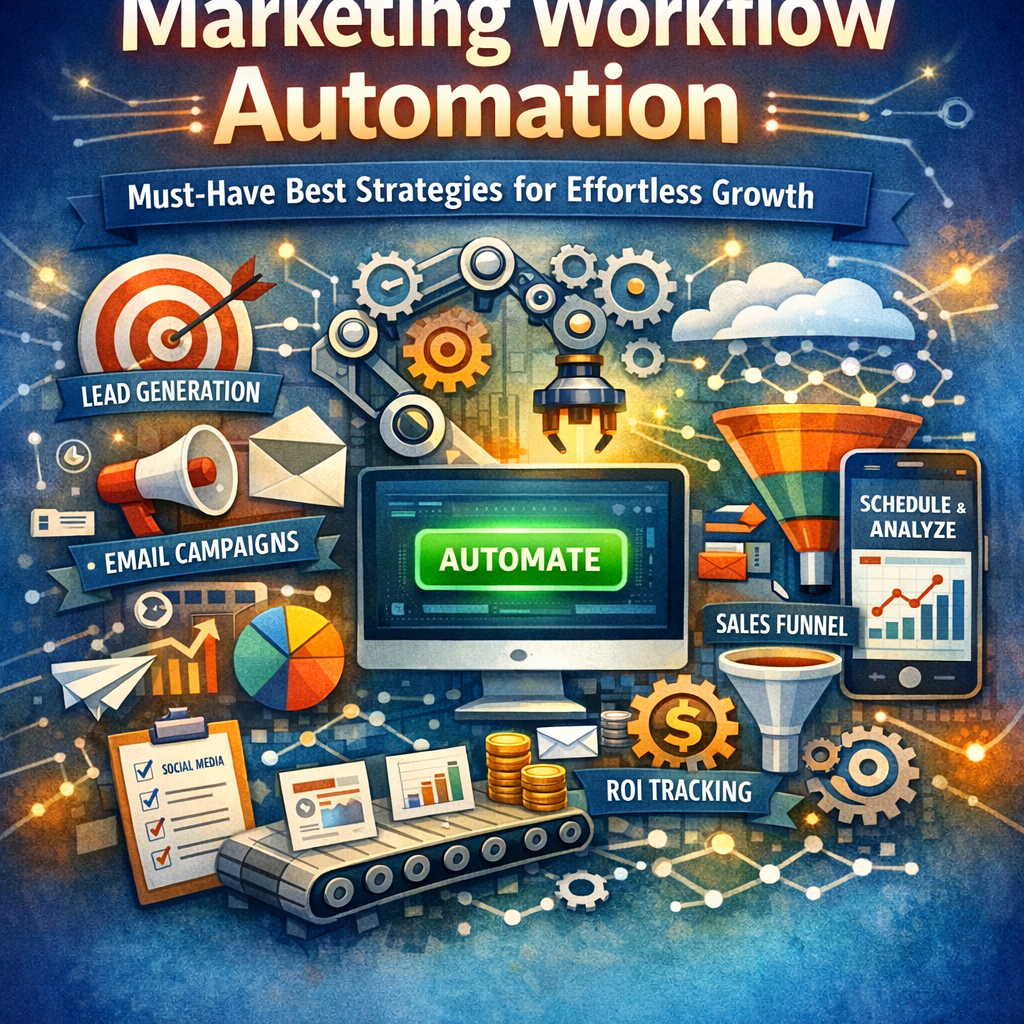
Marketing today involves far more than sending emails or posting on social media. Teams manage lead generation, customer segmentation, nurturing campaigns, analytics, ad performance, content approvals, and customer retention efforts—all at once. As businesses grow, these responsibilities become harder to manage manually.
That is where automation becomes essential. It allows businesses to create repeatable processes that run in the background while marketers focus on strategy, creativity, and optimization. Instead of spending hours assigning tasks or sending routine messages, teams can build workflows that trigger actions based on behavior, timing, or specific conditions.
The result is not just efficiency. It is also better consistency, stronger personalization, and a smoother customer journey.
What Is Marketing Workflow Automation?
At its core, marketing workflow automation is the use of software and predefined rules to streamline marketing tasks and processes. These workflows can be simple or advanced depending on the goals of the business.
A basic example might be:
– A visitor downloads a guide
– They are automatically added to an email list
– They receive a welcome email
– After two days, they get a follow-up resource
– If they click the link, they are moved into a sales-ready sequence
A more complex workflow can include lead scoring, CRM updates, internal notifications, retargeting ads, and personalized content recommendations.
The biggest advantage is that automation makes actions happen at the right time without constant manual input.
Core Benefits of Marketing Workflow Automation
1. Saves Time and Reduces Repetitive Work
Many marketing tasks are necessary but repetitive. Sending reminders, tagging leads, updating records, and routing prospects often consume valuable hours. Automation removes much of that manual work, freeing teams to concentrate on higher-impact projects.
2. Improves Lead Nurturing
Not every lead is ready to buy immediately. Automation helps businesses stay connected with prospects through educational emails, timely offers, and personalized content. This keeps leads engaged until they are ready to take the next step.
3. Increases Consistency
Manual processes often lead to missed steps and inconsistent communication. Automated workflows ensure each prospect or customer receives the right message in the right order, helping build trust and professionalism.
4. Supports Personalization at Scale
Customers expect relevant communication. Automation tools can segment audiences and trigger messages based on interests, behaviors, demographics, or purchase history. This creates a more personal experience without requiring one-to-one manual effort.
5. Improves Team Alignment
Marketing workflow automation can also connect marketing with sales and customer service. For example, when a lead reaches a certain score, sales can be notified automatically. This reduces delays and improves coordination across departments.
Best Strategies for Effortless Growth
To get real value from automation, businesses need more than software. They need the right strategy.
Marketing Workflow Automation Best Practices
Start With Clear Goals
Before building any workflow, define what success looks like. Are you trying to increase qualified leads, improve email engagement, reduce response time, or boost customer retention? Clear goals help you build workflows that support measurable outcomes rather than adding unnecessary complexity.
Map the Customer Journey
Effective automation follows the way real customers move through your funnel. Identify key touchpoints such as first visit, lead capture, product interest, purchase, onboarding, and re-engagement. Once these stages are clear, you can create workflows that support each one.
Automate the Right Tasks First
Not everything needs automation. Start with the processes that are repetitive, time-consuming, and easy to standardize. Good starting points include:
– Welcome email sequences
– Lead nurturing campaigns
– Abandoned cart reminders
– Social media scheduling
– Internal task notifications
– Contact segmentation
– Follow-up messages after form submissions
Starting small helps your team learn what works before expanding into more complex systems.
Use Segmentation for Better Results
One of the most powerful strategies is audience segmentation. Instead of sending the same message to everyone, divide your audience based on behavior, interests, stage in the funnel, location, or previous engagement.
For example, a first-time website visitor should not receive the same message as a loyal customer. Segmented automation leads to more relevant communication, which often improves open rates, click-through rates, and conversions.
Keep Workflows Simple and Logical
It is tempting to build highly detailed systems with many branches and triggers. However, overly complicated workflows become difficult to manage and optimize. Start with simple logic, test results, and gradually improve from there.
A clean workflow is easier to troubleshoot, easier for the team to understand, and more likely to perform consistently.
Align Automation With Human Interaction
Automation should support relationships, not replace them. Some moments still need a real person, especially when a lead becomes highly interested or a customer issue requires empathy. The best systems know when to automate and when to hand things over to a human.
For instance, if a lead repeatedly engages with product pages and pricing emails, the workflow might notify a salesperson to reach out personally.
Measure and Optimize Regularly
Automation is not a set-it-and-forget-it system. Review performance often. Pay attention to:
– Open rates
– Click-through rates
– Conversion rates
– Drop-off points
– Response times
– Lead quality
– Revenue influenced by campaigns
If a workflow is underperforming, test new subject lines, improve timing, refine segmentation, or simplify the message path.
Common Mistakes to Avoid
Even strong automation tools can fail without the right approach. Here are a few common mistakes:
Automating Broken Processes
If a process is confusing or inefficient manually, automating it will only make the problem faster. Improve the workflow first, then automate it.
Sending Too Many Messages
Automation can create message overload if every action triggers another email. Be strategic with frequency and timing so communication remains helpful rather than annoying.
Ignoring Data Quality
Bad data leads to poor automation. Inaccurate contact records, duplicate entries, and incomplete fields can disrupt even the best workflow. Make data hygiene a priority.
Forgetting the Customer Experience
Every automated action should feel relevant and useful. If a workflow seems robotic, repetitive, or disconnected from the customer’s actual needs, it will hurt engagement instead of helping it.
Tools and Workflow Ideas to Consider
Many platforms offer automation capabilities, from email marketing software to full CRM and campaign management systems. The best tool depends on your business size, goals, and existing tech stack. No matter which platform you choose, focus on workflows such as:
– Lead magnet delivery and follow-up
– Webinar registration and reminders
– Trial signup onboarding
– Customer onboarding sequences
– Re-engagement campaigns for inactive leads
– Review requests after purchase
– Sales alerts for high-intent leads
These workflows can create momentum across the entire customer lifecycle.
Final Thoughts
Marketing workflow automation is no longer just a helpful add-on for busy teams. It is a practical way to build smarter systems, deliver better customer experiences, and scale growth without scaling chaos. When businesses combine clear goals, thoughtful segmentation, simple processes, and regular optimization, automation becomes a powerful engine for consistent results.
The key is to use it intentionally. Focus on improving the customer journey, reducing friction, and giving your team more space to do meaningful work. With the right strategy in place, growth becomes more manageable, more measurable, and far more sustainable.