- Why a Strong Lead Conversion Strategy Matters
- Key Elements of an Effective Lead Conversion Strategy
- 1. Lead Qualification
- 2. Timely Follow-Up
- 3. Personalized Communication
- Best Tactics to Improve Conversion Rates
- Build Trust Early
- Optimize Landing Pages
- Use Lead Nurturing Campaigns
- Align Sales and Marketing Teams
- Leverage Automation Without Losing the Human Touch
- Common Mistakes That Hurt Conversions
- Ignoring Lead Intent
- Asking for Too Much Too Soon
- Weak Calls to Action
- Lack of Follow-Up Consistency
- How to Measure Success
- Final Thoughts
Lead Conversion Strategy: Must-Have Best Tactics for Growth
Lead conversion strategy is the bridge between generating interest and turning that interest into real revenue. Many businesses invest heavily in attracting prospects, but growth stalls when those leads are not nurtured, qualified, and guided toward action. A strong approach does more than increase sales numbers—it improves customer experience, shortens the sales cycle, and helps marketing efforts produce measurable results.
In today’s competitive market, simply collecting leads is not enough. Businesses need a clear system for understanding buyer intent, building trust, and removing friction from the decision-making process. When done well, conversion tactics create a smoother path from first contact to final purchase, making growth more predictable and sustainable.
Why a Strong Lead Conversion Strategy Matters
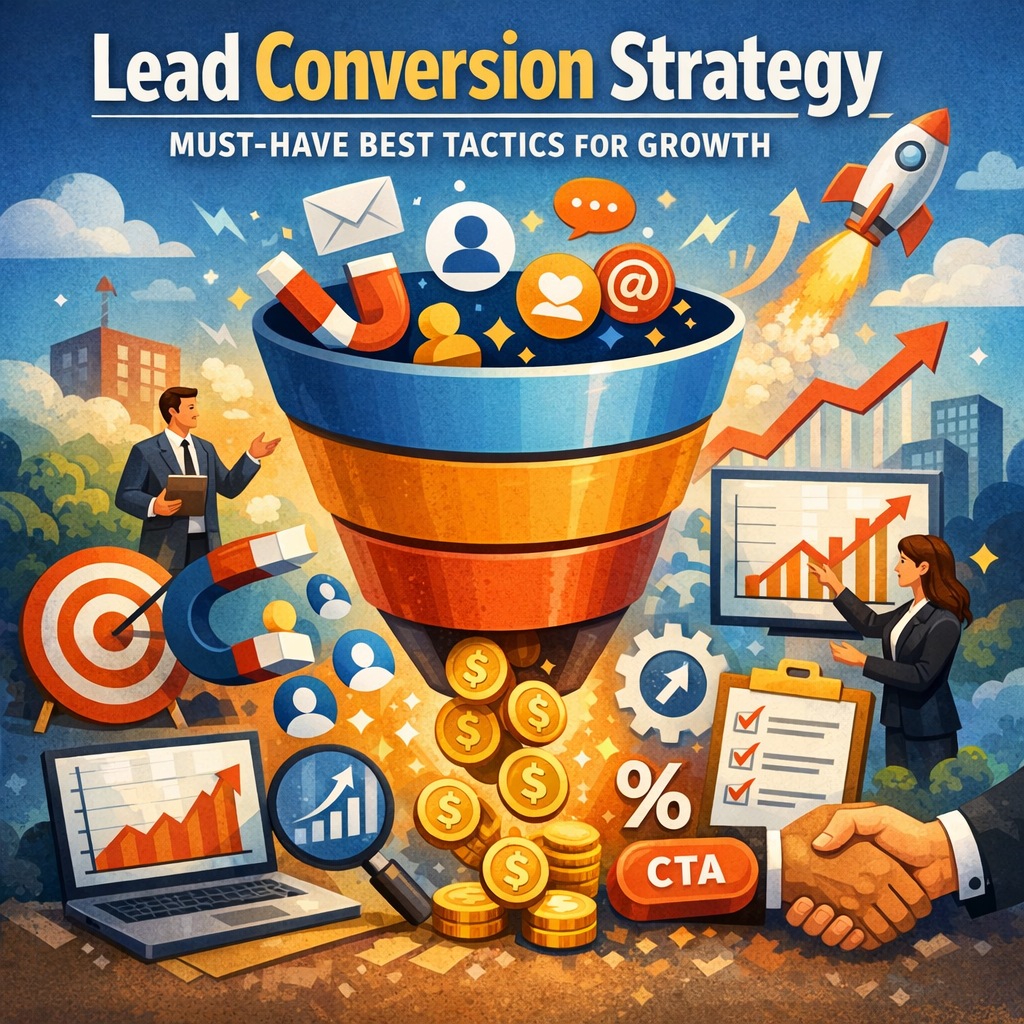
Generating leads can be expensive and time-consuming. If those leads do not convert, businesses end up wasting budget, energy, and opportunities. That is why improving conversion rates often delivers better returns than simply trying to attract more traffic.
A well-designed process helps teams:
– Identify high-quality leads faster
– Personalize communication based on buyer needs
– Reduce drop-off at critical decision points
– Increase revenue without increasing acquisition costs
– Build stronger long-term relationships with customers
In short, better conversion means better efficiency. Instead of chasing every prospect equally, companies can focus on the people most likely to buy.
Key Elements of an Effective Lead Conversion Strategy
Not every lead is ready to purchase immediately. Some are just exploring options, while others are comparing vendors or looking for urgent solutions. An effective system accounts for these different stages.
1. Lead Qualification
One of the most important steps is identifying which prospects are worth the most attention. Qualification helps sales and marketing teams separate serious buyers from casual browsers.
Useful criteria may include:
– Budget
– Need or pain point
– Authority to make decisions
– Purchase timeline
– Level of engagement with your brand
When teams qualify leads properly, they can spend more time on the opportunities that matter most.
2. Timely Follow-Up
Speed matters. A prospect who fills out a form or requests information is often most interested in the first few minutes or hours after taking action. Delayed follow-up gives competitors a chance to step in and win attention.
Quick responses show professionalism and increase trust. Even if a full sales conversation cannot happen immediately, an automated confirmation email, helpful resource, or scheduled callback can keep momentum alive.
3. Personalized Communication
Generic messages rarely persuade people to act. Buyers want to feel understood, not processed. Personalization helps businesses connect with leads in a more meaningful way by addressing specific goals, challenges, and interests.
This can include:
– Using the lead’s name and company details
– Referencing their industry or use case
– Recommending relevant products or services
– Sending content aligned with their stage in the funnel
The more relevant the message, the more likely the lead is to engage.
Best Tactics to Improve Conversion Rates
A successful lead conversion strategy relies on practical tactics that move people forward with confidence. Below are some of the most effective methods for turning interest into action.
Build Trust Early
People do not buy from companies they do not trust. Before asking for a commitment, provide proof that your business can deliver value.
Trust-building assets include:
– Customer reviews and testimonials
– Case studies with measurable results
– Certifications or awards
– Clear pricing and transparent policies
– Professional website design and easy navigation
Social proof can be especially powerful because it reduces uncertainty. When prospects see that others had a positive experience, they feel more comfortable moving ahead.
Optimize Landing Pages
A landing page should have one job: guide the visitor toward the next step. If the page is cluttered, confusing, or overloaded with options, conversions will suffer.
To improve performance:
– Use a clear, benefit-driven headline
– Keep forms short and simple
– Include a strong call to action
– Remove distractions like unnecessary links
– Make the page mobile-friendly
– Highlight key value points quickly
Even small changes, such as adjusting button text or simplifying the layout, can produce major improvements.
Use Lead Nurturing Campaigns
Most leads are not ready to buy on first contact. Nurturing helps maintain interest over time by offering useful information and building familiarity with your brand.
Effective nurturing may involve:
– Email sequences
– Educational blog content
– Product demos
– Webinars
– Retargeting ads
– Follow-up offers based on behavior
The goal is not to pressure leads, but to help them move closer to a decision naturally.
Align Sales and Marketing Teams
Conversion suffers when marketing and sales operate with different goals, definitions, or messages. Marketing may generate leads that sales sees as unqualified, while sales may fail to follow up effectively on good opportunities.
Alignment improves results by ensuring:
– Shared definitions of qualified leads
– Clear handoff processes
– Common reporting metrics
– Consistent brand messaging
– Feedback loops between teams
When both functions work together, leads experience a smoother and more cohesive journey.
Leverage Automation Without Losing the Human Touch
Automation can make conversion efforts faster and more scalable. It helps businesses send instant responses, segment audiences, track behavior, and trigger follow-up sequences efficiently.
However, automation should support human interaction, not replace it completely. Prospects still want authentic answers and personalized conversations when making important decisions.
Use automation for:
– Welcome emails
– Appointment reminders
– Behavioral triggers
– Lead scoring
– Follow-up workflows
Then let skilled sales or customer success professionals handle the moments that require empathy and deeper discussion.
Common Mistakes That Hurt Conversions
Even businesses with strong lead generation can struggle if they fall into common traps. Avoiding these issues can make a major difference.
Ignoring Lead Intent
Not all leads should receive the same message. Someone downloading an educational guide needs a different approach than someone requesting pricing information. Failing to match communication to intent can reduce engagement.
Asking for Too Much Too Soon
If a business asks for a sale before establishing value, prospects may back away. Focus first on understanding needs and providing helpful information.
Weak Calls to Action
A vague call to action such as “learn more” may not be enough. Stronger prompts like “Book a Free Demo” or “Get Your Custom Quote” create clearer direction.
Lack of Follow-Up Consistency
Many sales are lost not because the prospect was uninterested, but because the business stopped following up too early. Consistency matters, especially in longer buying cycles.
How to Measure Success
A great conversion system is always improving. To understand what is working, businesses should track key performance indicators regularly.
Important metrics include:
– Lead-to-customer conversion rate
– Response time
– Cost per conversion
– Email open and click-through rates
– Landing page conversion rate
– Sales cycle length
– Customer acquisition cost
Reviewing these numbers helps teams spot bottlenecks and optimize underperforming areas.
Final Thoughts
Growth becomes easier when businesses focus not just on attracting attention, but on guiding prospects toward confident decisions. A thoughtful process combines speed, personalization, trust, and teamwork to create better outcomes at every stage of the buyer journey.
The most effective approach is never static. Markets change, buyer behavior evolves, and expectations rise. Businesses that continue testing, refining, and improving their tactics will be better positioned to turn more leads into loyal customers—and turn that momentum into lasting growth.