- Why Organic Traffic Matters
- Core Organic Traffic Strategies for Long-Term Success
- 1. Focus on Search Intent First
- 2. Build Content Around Topic Clusters
- 3. Optimize On-Page SEO Elements
- Content Quality Is Still the Biggest Driver
- Technical SEO Supports Every Organic Traffic Strategy
- Organic Traffic Strategies That Improve Authority
- Earn Quality Backlinks
- Refresh Existing Content
- Strengthen Internal Linking
- Measuring What Works
- Final Thoughts
How to Build Sustainable Website Growth with Smarter SEO Tactics
Organic traffic strategies are the foundation of long-term online growth because they help websites attract visitors without relying only on paid ads. When done well, they improve visibility, build credibility, and create a steady flow of qualified users who are already interested in what a business offers. Unlike short-term campaigns that stop producing results once the budget runs out, organic methods continue delivering value over time.
For brands, publishers, and small businesses alike, the real advantage of organic growth is sustainability. It is not about chasing quick wins. It is about creating useful content, optimizing pages for search intent, and building a site experience that search engines and users both trust. If your goal is consistent traffic that converts, the right approach can make a major difference.
Why Organic Traffic Matters
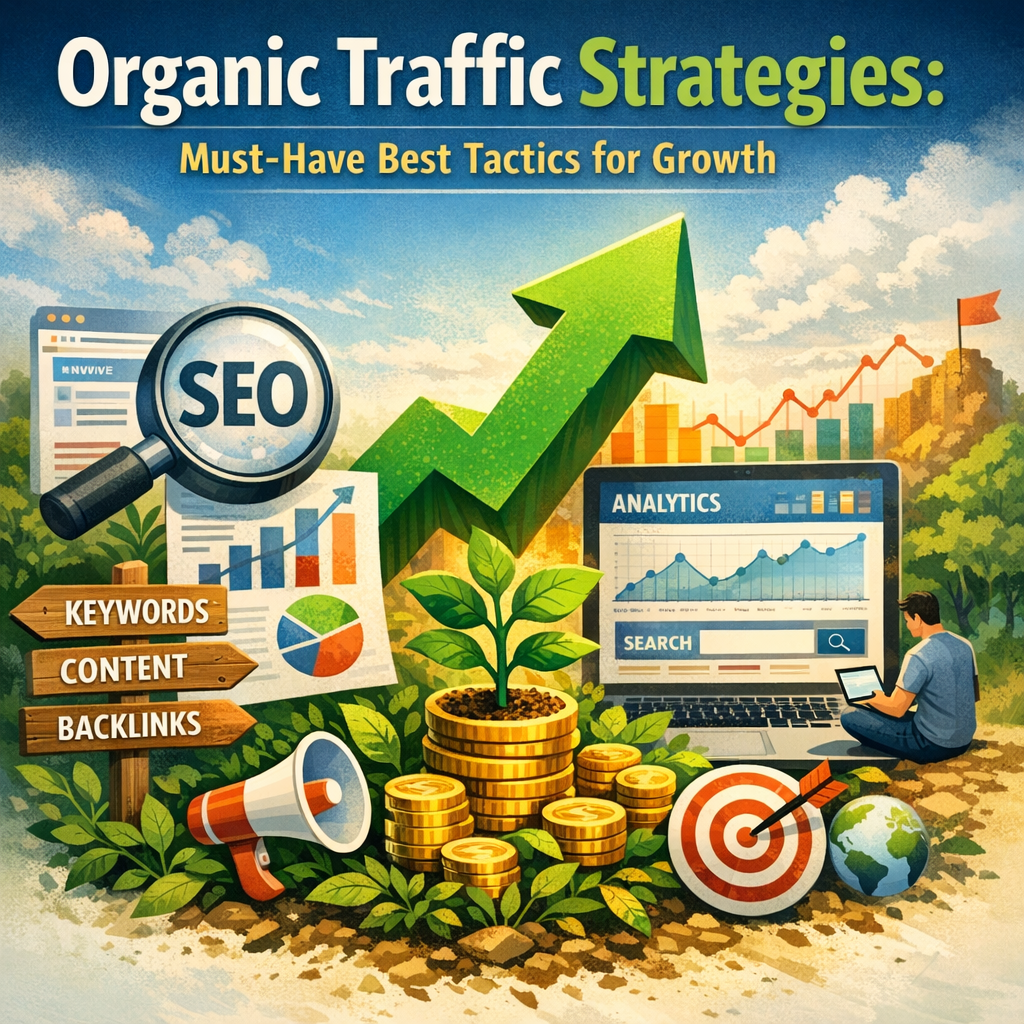
Organic traffic is often one of the highest-quality sources of website visitors. People arriving from search engines are usually looking for an answer, a solution, or a product. That means they often have stronger intent than someone who clicks a display ad or casually scrolls past a social post.
There are several reasons organic growth is worth investing in:
– It builds authority in your niche
– It reduces dependence on paid acquisition
– It compounds over time
– It attracts users at different stages of the buying journey
– It supports brand trust and visibility
A strong organic presence also helps businesses stay competitive. If your competitors are ranking for the terms your audience searches every day, they are capturing attention before your brand even enters the conversation.
Core Organic Traffic Strategies for Long-Term Success
There is no single tactic that guarantees rankings. The best results usually come from combining several proven methods into one consistent process.
1. Focus on Search Intent First
One of the most important steps in SEO is understanding why someone is searching. A keyword alone is not enough. You need to know whether the user wants information, wants to compare options, or is ready to buy.
For example, someone searching “how to improve email open rates” likely wants education. Someone searching “best email marketing tools” is probably comparing solutions. Your content should match that intent as closely as possible.
To do this well:
– Study the top-ranking pages for your target keyword
– Look at the format users expect, such as guides, lists, product pages, or tutorials
– Answer the main question clearly and early
– Include supporting details that make the page more useful
When content aligns with intent, it is more likely to rank and keep users engaged.
2. Build Content Around Topic Clusters
Publishing random blog posts can bring some traffic, but a structured content strategy works better. Topic clusters allow you to create a main pillar page on a broad subject and then support it with related articles that cover subtopics in detail.
This approach helps search engines understand your expertise and improves internal linking across your site. It also gives readers a better experience because they can explore connected content easily.
A strong cluster might include:
– A pillar article on a broad SEO topic
– Supporting posts answering common questions
– Case studies
– Tool comparisons
– Beginner and advanced guides
Over time, this structure can strengthen rankings across an entire category instead of just one page.
3. Optimize On-Page SEO Elements
Even the best article may struggle if basic on-page optimization is missing. Search engines rely on page signals to understand what your content is about.
Important elements include:
– Title tags that are clear and compelling
– Meta descriptions that encourage clicks
– Headings that organize the content logically
– Internal links to related pages
– Keyword use that feels natural, not forced
– Descriptive image alt text
– Clean, readable URLs
Good on-page SEO should improve clarity for both users and search engines. It is not about stuffing keywords into every paragraph. It is about making your content easier to interpret and easier to navigate.
Content Quality Is Still the Biggest Driver
Search engines increasingly reward content that demonstrates real value. That means shallow articles written just to target a keyword are less likely to succeed than pages that genuinely help the reader.
High-quality content tends to have a few shared traits:
– It answers specific questions thoroughly
– It includes original insights or examples
– It is easy to read and well formatted
– It stays updated as information changes
– It reflects experience, expertise, and trustworthiness
If you want stronger results, ask yourself whether your content adds something useful beyond what already exists. That extra value could be a clearer explanation, better examples, fresher data, or a more practical step-by-step approach.
Technical SEO Supports Every Organic Traffic Strategy
Even great content can underperform if a website has technical problems. Slow pages, broken links, indexing issues, and poor mobile usability can all hurt rankings and user experience.
Key technical areas to review include:
– Page speed and Core Web Vitals
– Mobile responsiveness
– Crawlability and indexing
– Secure HTTPS setup
– Structured data where appropriate
– Broken page and redirect management
A technically healthy website makes it easier for search engines to discover and rank your pages. It also makes it easier for visitors to stay, browse, and convert.
Organic Traffic Strategies That Improve Authority
Authority plays a major role in organic visibility. Search engines want to recommend sources they consider trustworthy. That trust is built through content quality, site reputation, and external signals.
Here are a few effective ways to strengthen authority:
Earn Quality Backlinks
Backlinks remain an important ranking factor when they come from relevant and credible websites. The best links are earned naturally through valuable content, digital PR, partnerships, guest contributions, and original research.
Instead of chasing hundreds of weak links, focus on earning a smaller number of meaningful ones.
Refresh Existing Content
Not every traffic gain comes from publishing something new. Updating older pages can be one of the fastest ways to improve performance. Add current statistics, strengthen weak sections, improve readability, and align the page with the latest search intent.
Many websites overlook this opportunity, even though content refreshes can revive rankings and increase click-through rates.
Strengthen Internal Linking
Internal links help distribute authority across your website and guide users toward related content. They also help search engines discover important pages more efficiently.
A strong internal linking strategy should:
– Connect related articles naturally
– Use descriptive anchor text
– Point to priority pages consistently
– Avoid orphan pages with no internal references
Measuring What Works
To improve results, you need to track performance. Organic growth is rarely instant, so measurement helps you see which efforts are creating momentum.
Important metrics to monitor include:
– Organic sessions
– Keyword rankings
– Click-through rate
– Bounce rate and engagement
– Pages per session
– Conversion rate from organic visitors
– Backlink growth
Use tools like Google Search Console and analytics platforms to identify your top-performing pages, discover search queries, and spot opportunities for improvement.
Final Thoughts
Strong SEO performance rarely comes from one isolated tactic. It comes from a clear strategy built on helpful content, technical health, user intent, and consistent optimization. Brands that treat organic growth as a long-term asset usually see the most lasting benefits.
The best approach is to start with the basics, build content that serves real needs, and refine your site over time. When these efforts work together, organic visibility becomes more than just a traffic source. It becomes a reliable engine for awareness, trust, and business growth.