- Why Content Marketing KPIs Matter
- Essential Traffic and Visibility Metrics
- Organic Traffic
- Page Views and Unique Visitors
- Traffic Sources
- Engagement-Focused Content Marketing KPIs
- Time on Page
- Bounce Rate
- Scroll Depth
- Social Shares and Comments
- Conversion Metrics That Show Business Impact
- Lead Generation
- Conversion Rate
- Cost Per Lead
- Assisted Conversions
- SEO and Authority Metrics to Watch
- Keyword Rankings
- Backlinks
- Click-Through Rate in Search
- Retention and Revenue Metrics
- Email Subscriber Growth
- Customer Retention
- Revenue Attribution
- How to Choose the Right KPIs
- Common Mistakes to Avoid
- Turning Metrics Into Better Results
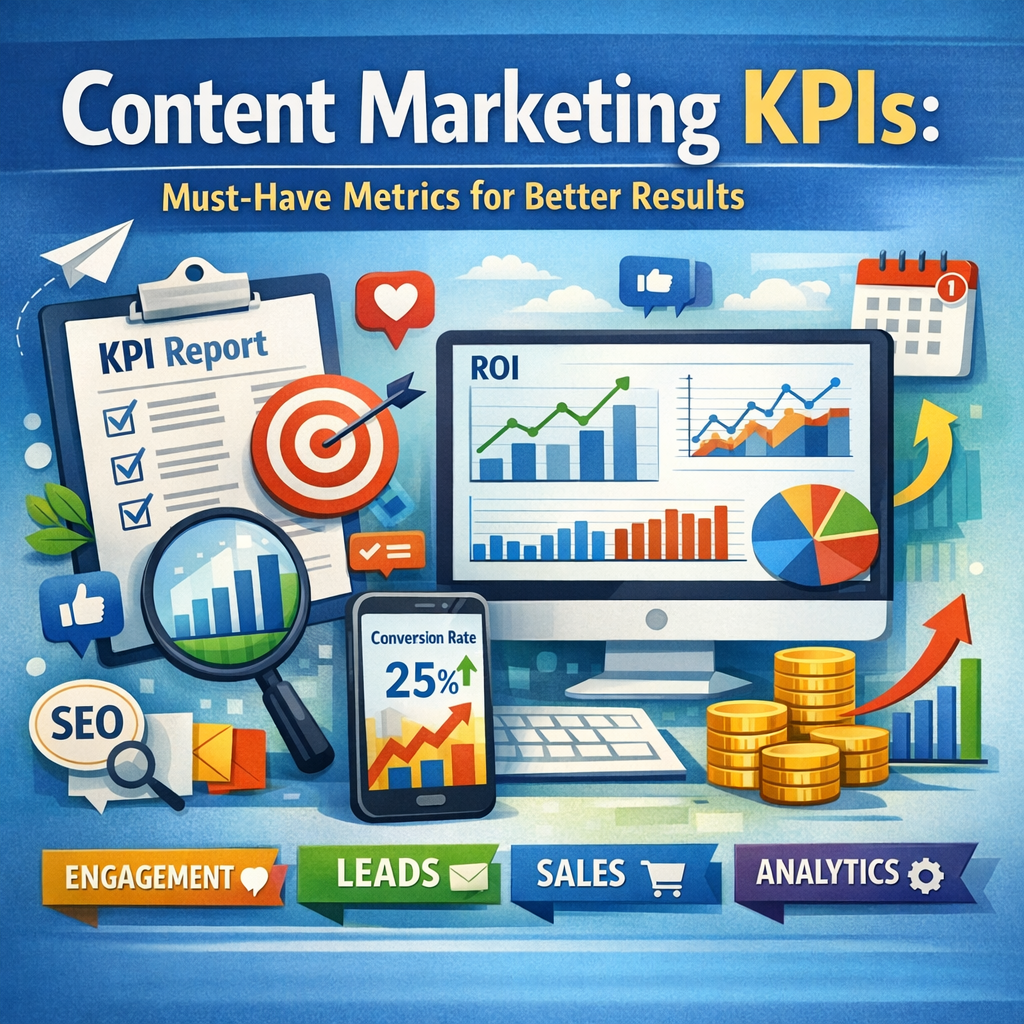
Content Marketing KPIs: Must-Have Metrics for Better Results
Content marketing KPIs give businesses a practical way to measure whether their content is actually driving awareness, engagement, leads, and revenue. Without the right metrics, it is easy to publish blog posts, videos, emails, and social content without knowing what is working and what needs improvement. Tracking the right indicators helps marketers make smarter decisions, improve performance over time, and connect content efforts to real business outcomes.
In many companies, content is judged by surface-level numbers alone. Page views may look impressive, but traffic means little if visitors leave quickly or never convert. A strong measurement strategy goes beyond vanity metrics and focuses on the data that shows progress toward specific goals. Whether the objective is brand visibility, lead generation, customer education, or sales support, selecting the right KPIs is essential.
Why Content Marketing KPIs Matter
Content should not exist just to fill a calendar. It should support measurable goals. That is why content marketing KPIs matter so much. They allow teams to:
– Understand audience behavior
– Identify high-performing topics and formats
– Improve SEO and organic reach
– Measure lead quality and conversions
– Prove the return on content investment
– Refine future strategy based on data
When marketers rely on clear benchmarks, they can stop guessing and start optimizing. Instead of asking, “Did this article do well?” they can ask, “Did this article increase organic traffic, boost email signups, or assist conversions?”
Essential Traffic and Visibility Metrics
Traffic metrics are often the first layer of content measurement. They help determine whether people are discovering your content in the first place.
Organic Traffic
Organic traffic measures how many visitors arrive from search engines. This is one of the most valuable metrics because it shows whether your content is ranking and attracting users without ongoing ad spend. A steady increase in organic traffic often signals that your SEO and content strategy are aligned.
Page Views and Unique Visitors
Page views show how often a piece of content is viewed, while unique visitors indicate how many individual users visited it. Together, these metrics can help you spot content that attracts broad attention. However, they should never be analyzed in isolation.
Traffic Sources
Knowing where your audience comes from is just as important as knowing how much traffic you get. Break traffic down by:
– Organic search
– Direct visits
– Social media
– Referral sites
– Email campaigns
– Paid promotion
This helps you understand which distribution channels are most effective and where you should invest more effort.
Engagement-Focused Content Marketing KPIs
Once people reach your content, the next question is whether they interact with it meaningfully.
Time on Page
Time on page reveals how long users stay with a piece of content. A longer average time usually suggests that visitors are actually reading, watching, or engaging. For long-form educational content, this metric can be especially useful.
Bounce Rate
Bounce rate shows the percentage of users who leave after viewing only one page. A high bounce rate is not always bad, but when paired with short session duration, it may indicate weak relevance, poor user experience, or unmet expectations.
Scroll Depth
Scroll depth measures how far users move down the page. This KPI helps determine whether people are consuming the full article or dropping off early. If many visitors abandon content halfway through, it may be a sign to improve structure, clarity, or pacing.
Social Shares and Comments
Shares, comments, and saves reflect how valuable or interesting the content feels to the audience. These metrics are particularly useful for thought leadership, brand awareness, and community-building efforts.
Conversion Metrics That Show Business Impact
The most valuable content often does more than attract attention. It moves users toward action.
Lead Generation
If your content includes downloadable guides, webinar signups, newsletters, or contact forms, track how many leads each asset generates. This shows which topics and formats are most effective at turning readers into prospects.
Conversion Rate
Conversion rate measures the percentage of users who complete a desired action. Examples include:
– Signing up for a newsletter
– Downloading a resource
– Requesting a demo
– Making a purchase
A high-performing piece of content does not necessarily need massive traffic if it converts exceptionally well.
Cost Per Lead
For teams investing in content production and promotion, cost per lead is a useful efficiency metric. It helps answer whether the content strategy is financially sustainable and which campaigns deliver the best return.
Assisted Conversions
Not every piece of content generates the final click before a sale. Some content plays a supporting role earlier in the buyer journey. Assisted conversions help you understand which blog posts, case studies, or videos influenced the decision, even if they were not the last touchpoint.
SEO and Authority Metrics to Watch
A strong content strategy should also build long-term digital visibility and trust.
Keyword Rankings
Tracking rankings for target keywords helps you see whether your content is gaining search visibility. Consistent upward movement suggests that the content is relevant, optimized, and competitive.
Backlinks
Backlinks from reputable sites are a strong signal of authority. If your content earns links naturally, it often means it offers unique value, useful data, or strong insights.
Click-Through Rate in Search
Search impressions alone are not enough. Click-through rate from search engine results pages tells you whether your headlines and meta descriptions are compelling enough to earn traffic.
Retention and Revenue Metrics
For businesses focused on customer growth and long-term value, retention metrics should be part of the picture.
Email Subscriber Growth
If content supports email list building, track how quickly your subscriber base grows and which assets drive the most signups.
Customer Retention
Educational content, onboarding materials, and knowledge resources can improve customer satisfaction and reduce churn. If retention improves after content initiatives are introduced, that is a strong sign of value.
Revenue Attribution
Revenue attribution connects content performance to actual sales. This can be challenging, but even partial attribution offers useful insight. Knowing which content themes or campaigns influence revenue helps justify continued investment.
How to Choose the Right KPIs
Not every metric matters equally. The best approach is to match KPIs to your goals.
– Brand awareness: organic traffic, impressions, reach, backlinks, social shares
– Audience engagement: time on page, scroll depth, comments, repeat visits
– Lead generation: form submissions, download rates, conversion rate, cost per lead
– Sales enablement: assisted conversions, demo requests, revenue influenced
– Customer retention: subscriber engagement, support content usage, churn reduction
Choose a manageable set of KPIs rather than tracking everything. Too many metrics can create confusion instead of clarity.
Common Mistakes to Avoid
Many teams struggle with measurement because they focus on the wrong signals. Avoid these common mistakes:
– Relying only on page views
– Ignoring conversion and revenue metrics
– Tracking too many KPIs at once
– Failing to set benchmarks
– Measuring results without context
– Not reviewing performance consistently
A useful KPI is not just a number on a dashboard. It should lead to action, insight, and better decision-making.
Turning Metrics Into Better Results
The real value of measurement comes from what you do next. Review performance regularly, compare content pieces by topic and format, and look for patterns. Which articles bring in qualified leads? Which videos keep viewers engaged? Which landing pages convert best? Use those insights to refine your editorial plan, improve distribution, and update underperforming content.
Strong content programs are built on both creativity and accountability. When you track the right numbers, you can create more of what your audience wants and more of what your business needs. That is the power of using the right content marketing KPIs.