- What Is SEO Structured Data?
- Why SEO Structured Data Matters
- Better search visibility
- Improved content understanding
- Support for voice search and AI-driven results
- Stronger trust signals
- SEO Structured Data Best Practices You Should Follow
- Use the most appropriate schema type
- Prefer JSON-LD whenever possible
- Match markup to visible content
- Include all recommended properties
- Keep data updated
- Common Types of SEO Structured Data
- How to Implement SEO Structured Data Correctly
- Mistakes to Avoid
- Measuring Results
- Final Thoughts
SEO Structured Data: Must-Have Best Practices for Stunning Results
seo structured data helps search engines understand your website more clearly, making it easier for them to display rich, eye-catching results in search pages. From review stars and FAQs to product details and article metadata, structured data can improve how your pages appear and how users interact with them. While it does not guarantee higher rankings on its own, it can improve visibility, support click-through rates, and strengthen the overall search experience.
What Is SEO Structured Data?
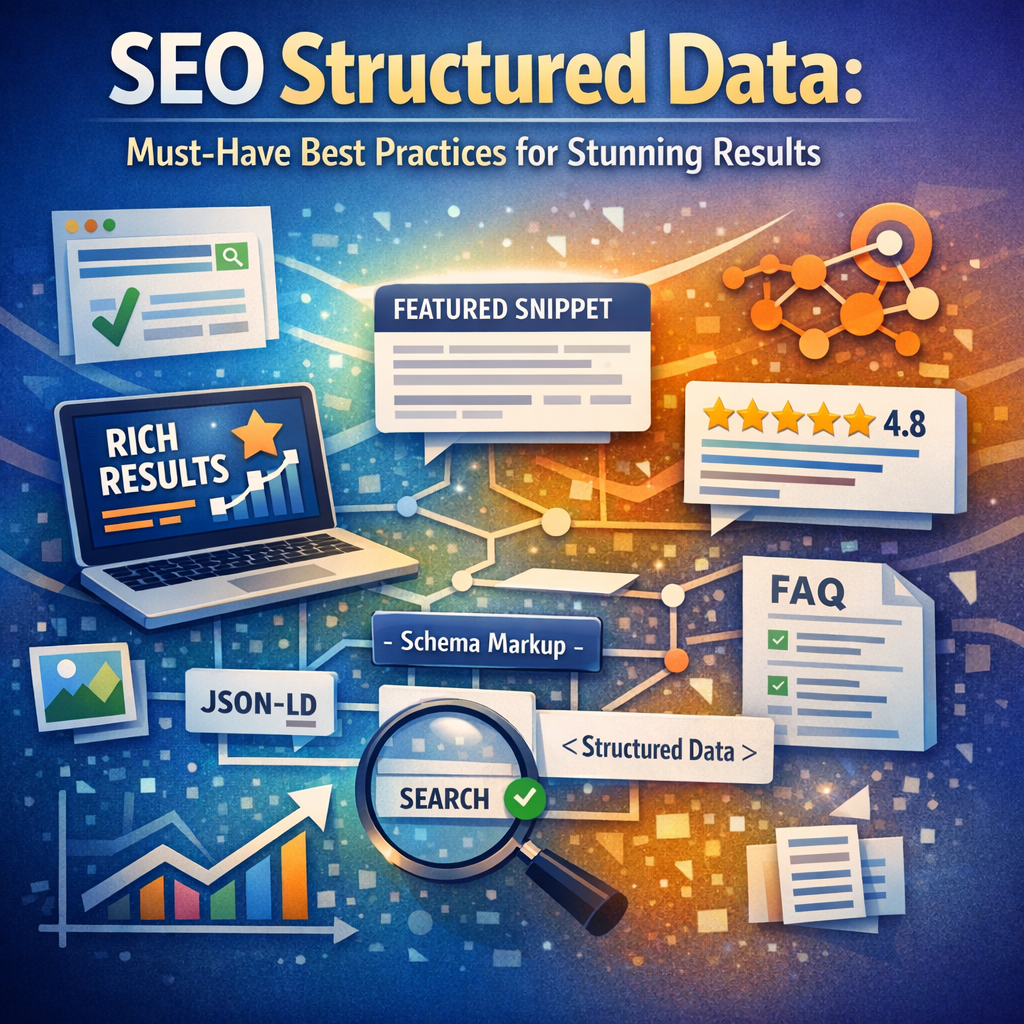
Structured data is a standardized way of labeling content on a webpage so search engines can interpret it with more accuracy. It is usually added using Schema.org vocabulary, most commonly in JSON-LD format. Instead of forcing search engines to guess whether a number is a price, a date is an event time, or a paragraph is an answer to a question, structured data gives those elements clear meaning.
For example, a recipe page can specify cooking time, ingredients, ratings, and calories. A product page can identify price, availability, and brand. An article can highlight the headline, author, publish date, and featured image. This extra layer of context helps search engines present richer and more relevant listings.
Why SEO Structured Data Matters
Adding structured data has benefits beyond technical SEO checklists. It plays a practical role in how your content is discovered and displayed.
Better search visibility
Rich results stand out. A listing with stars, prices, breadcrumbs, or FAQ dropdowns often attracts more attention than a plain blue link. Even if your position remains the same, stronger presentation can improve clicks.
Improved content understanding
Search engines use structured data to classify and interpret pages more accurately. That means your content has a better chance of being matched with the right user intent.
Support for voice search and AI-driven results
As search becomes more conversational and AI-assisted, machine-readable content becomes increasingly valuable. Structured data helps systems pull precise facts from your pages and use them in enhanced search features.
Stronger trust signals
When users see ratings, business details, product information, or event data directly in search results, they often feel more confident about clicking through.
SEO Structured Data Best Practices You Should Follow
Using markup is not just about adding code. The real value comes from accuracy, relevance, and consistency. Here are the best practices that matter most.
Use the most appropriate schema type
Do not use generic markup when a more specific option exists. If a page is about a product, use Product schema. If it is a blog post, use Article or BlogPosting. If it answers common questions, use FAQPage only when the content truly fits that format.
Choosing the right type gives search engines the clearest possible signals. It also improves eligibility for specific rich result features.
Prefer JSON-LD whenever possible
JSON-LD is the recommended format for most structured data implementations because it is cleaner, easier to manage, and less likely to break your page layout. It can usually be added in the head or body of a page without wrapping existing HTML elements.
For most websites, JSON-LD is the simplest and most scalable way to maintain structured data across multiple templates.
Match markup to visible content
One of the most important rules is honesty. If your page markup says it includes five-star reviews, those reviews should be visible to users on the page. If you mark up an FAQ section, the questions and answers should actually appear in the content.
Misleading or hidden structured data can result in manual actions or loss of rich result eligibility. Accuracy is essential.
Include all recommended properties
Many schema types have required and recommended fields. While required fields are necessary for eligibility, recommended fields can improve completeness and performance. For example, product markup becomes more useful when it includes price, currency, availability, image, and brand.
The more complete the data, the easier it is for search engines to use it effectively.
Keep data updated
Outdated markup can harm both user trust and search quality. If a product is out of stock, update the availability. If an event date changes, update the event schema. If an article is revised, make sure the modified date reflects that change where appropriate.
Structured data should evolve with the content, not remain frozen after initial implementation.
Common Types of SEO Structured Data
Different websites benefit from different schema types. Some of the most useful include:
– Article for blog posts, news content, and editorial pages
– Product for ecommerce listings
– Breadcrumb for clearer site hierarchy in search
– FAQPage for commonly asked questions
– LocalBusiness for company location and contact details
– Review and AggregateRating for ratings and feedback
– Event for concerts, webinars, conferences, and local happenings
– Recipe for cooking content with detailed instructions and ingredients
The key is to focus on the markup that aligns with your actual content and business goals.
How to Implement SEO Structured Data Correctly
If you are adding structured data to your site, start with your most valuable pages. Product pages, service pages, blog posts, and local landing pages are often strong candidates.
A practical implementation process looks like this:
1. Identify the page type and search intent
2. Select the best matching schema type
3. Add required and recommended properties
4. Ensure the markup matches visible content
5. Test the page with validation tools
6. Monitor performance in Google Search Console
Many content management systems and SEO plugins can automate part of the process, but automation still needs review. Templates can produce errors if they apply the wrong schema or insert incomplete values.
Mistakes to Avoid
Even well-meaning site owners make avoidable errors with structured data. Watch out for these common issues:
– Using schema that does not match the page purpose
– Marking up content that users cannot see
– Forgetting to update pricing, availability, or dates
– Applying review markup incorrectly on self-serving pages
– Creating duplicate or conflicting structured data blocks
– Ignoring validation warnings and errors
Structured data works best when treated as part of content quality, not just technical decoration.
Measuring Results
After implementation, track the impact over time. Google Search Console can show whether your pages are eligible for rich results and whether any markup errors exist. You can also monitor:
– Click-through rate changes
– Impressions for targeted pages
– Appearance in rich result reports
– Engagement metrics from organic traffic
Not every page will earn a rich result, but clean and relevant markup improves your chances and supports better search communication overall.
Final Thoughts
Structured data is one of the clearest ways to help search engines understand your content and present it more effectively. When used properly, it can enhance visibility, improve user experience, and make your search listings more compelling.
The best approach is simple: use the right schema, keep it accurate, align it with visible content, and maintain it over time. Done well, this small technical layer can create a meaningful advantage in organic search.