- What Is an SEO Content Plan?
- Why an SEO Content Plan Matters
- 1. Target the Right Audience
- 2. Improve Content Quality
- 3. Support the Full Buyer Journey
- 4. Save Time and Resources
- 5. Build Topical Authority
- Core Elements of an Effective SEO Content Plan
- How to Build an SEO Content Plan Step by Step
- 1. Define Your Goals
- 2. Understand Your Audience
- 3. Do Keyword Research
- 4. Map Search Intent
- 5. Build Topic Clusters
- 6. Create a Content Calendar
- 7. Optimize Every Piece Properly
- 8. Measure and Improve
- Common Mistakes to Avoid
- Publishing Without Intent
- Ignoring Content Updates
- Chasing Only High-Volume Keywords
- Forgetting Internal Links
- Writing Only for Search Engines
- Tools That Can Support Your Workflow
- Final Thoughts
SEO Content Plan: Must-Have Guide for Effortless Growth
SEO content plan is the foundation of consistent organic growth. Without a clear plan, businesses often publish random blog posts, chase scattered keywords, and wonder why traffic stays flat. A strong approach helps you create content with purpose, target the right audience, and turn search visibility into measurable results.
If you want steady website traffic without relying only on paid ads, building a system around search-driven content is one of the smartest moves you can make. It brings structure to your ideas, helps your team stay focused, and ensures every piece of content supports a bigger business goal.
What Is an SEO Content Plan?
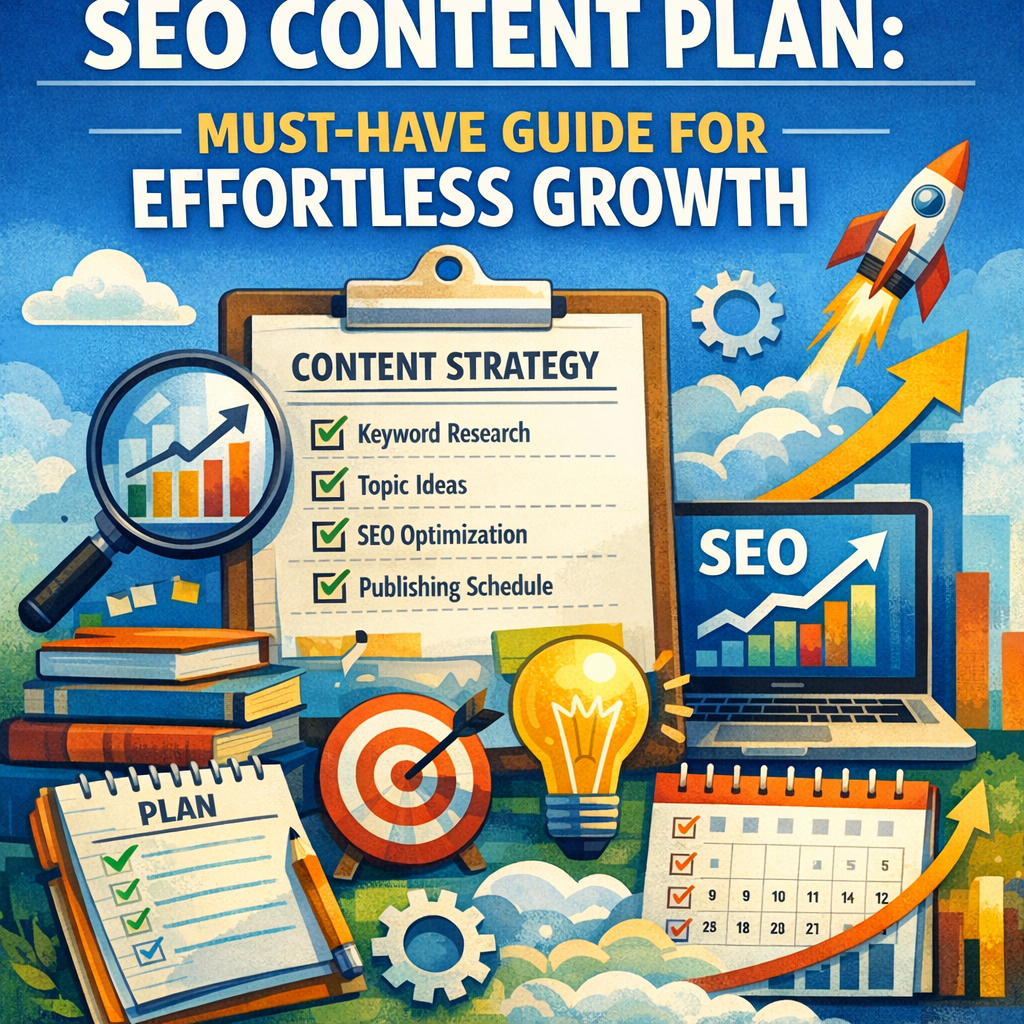
An SEO content plan is a strategic roadmap for creating, publishing, and updating content that is designed to perform well in search engines. It goes beyond simply picking a few keywords and writing articles. It connects keyword research, user intent, content topics, publication timelines, and performance tracking into one organized system.
A useful plan answers important questions such as:
– What topics matter most to your audience?
– Which keywords are worth targeting?
– What type of content should you create?
– How often should you publish?
– How will you measure success?
Instead of creating content based on guesswork, you make decisions based on search demand, competition, and business priorities.
Why an SEO Content Plan Matters
Many websites fail to grow because their content lacks direction. One week they publish a product update, the next week a broad opinion piece, and then nothing for a month. Search engines and users both reward consistency and relevance.
A well-built plan helps you:
1. Target the Right Audience
When you know what your audience is searching for, you can create content that directly answers their questions. This makes your site more helpful and more likely to rank.
2. Improve Content Quality
Planning allows you to focus on depth, relevance, and structure instead of rushing random posts. Better content earns more trust, backlinks, and engagement.
3. Support the Full Buyer Journey
Not every visitor is ready to buy right away. Some need educational content, some need comparisons, and others need proof. A smart content strategy maps topics to awareness, consideration, and decision stages.
4. Save Time and Resources
A clear roadmap reduces confusion. Writers, editors, and marketers know what to create and why. This leads to smoother workflows and less wasted effort.
5. Build Topical Authority
Publishing related content around a core subject helps search engines understand your expertise. Over time, this strengthens your visibility across a wider set of keywords.
Core Elements of an Effective SEO Content Plan
A successful framework is not complicated, but it does require a few essential parts working together.
How to Build an SEO Content Plan Step by Step
1. Define Your Goals
Start by identifying what you want your content to achieve. Common goals include:
– Increasing organic traffic
– Generating leads
– Improving brand awareness
– Supporting product or service pages
– Ranking for high-value keywords
Your goals will shape your content choices. For example, if lead generation is the priority, you may focus on practical guides, case studies, and landing page support content.
2. Understand Your Audience
Before researching keywords, understand who you are trying to reach. Look at customer pain points, common questions, industry challenges, and motivations.
Create simple audience profiles that include:
– Job role or buyer type
– Main goals
– Problems they want to solve
– Questions they ask before buying
– Preferred content format
This helps you create content that feels relevant rather than generic.
3. Do Keyword Research
Keyword research is the backbone of your strategy. Focus on terms that align with your audience and business goals, not just the ones with the highest volume.
Look for:
– Primary keywords
– Long-tail keywords
– Question-based searches
– Low-competition opportunities
– Commercial intent keywords
Group related keywords into clusters so one article can target a main term and several supporting phrases naturally.
4. Map Search Intent
Not all keywords mean the same thing. Some users want information, others want comparisons, and some are ready to take action.
The main intent types are:
– Informational: users want to learn
– Navigational: users want a specific website or page
– Commercial: users are comparing options
– Transactional: users are ready to buy or sign up
When your content matches the intent behind the keyword, it has a much better chance of ranking and converting.
5. Build Topic Clusters
Instead of publishing isolated content, organize topics into clusters. Create a main pillar page around a broad subject, then support it with related articles that explore subtopics in detail.
For example, if your pillar topic is content marketing, supporting articles might cover keyword research, on-page SEO, editorial calendars, and content audits. Internal links connect everything together and strengthen your site structure.
6. Create a Content Calendar
A plan becomes useful when it is scheduled. Build a calendar that includes:
– Topic title
– Target keyword
– Search intent
– Content format
– Publish date
– Owner or writer
– Status
– Update schedule
This keeps your team aligned and helps maintain momentum over time.
7. Optimize Every Piece Properly
Once content is created, make sure it is optimized for both readers and search engines.
Best practices include:
– Writing clear headlines and subheadings
– Using the target keyword naturally
– Adding internal links
– Including meta titles and descriptions
– Structuring content for readability
– Using relevant images or visuals
– Answering the main question early
Optimization should feel natural. Keyword stuffing and awkward phrasing usually hurt more than help.
8. Measure and Improve
Publishing is only the beginning. Review your content regularly to see what is working and what needs improvement.
Track metrics such as:
– Organic traffic
– Keyword rankings
– Click-through rate
– Bounce rate
– Time on page
– Conversions
– Backlinks
Use this data to refresh underperforming articles, expand winning topics, and improve internal linking.
Common Mistakes to Avoid
Even a good strategy can lose momentum if you fall into common traps.
Publishing Without Intent
If you create content without knowing why it exists, it is unlikely to perform well. Every article should serve a clear purpose.
Ignoring Content Updates
Older content can often be improved faster than creating something new. Refreshing statistics, examples, and structure can bring pages back to life.
Chasing Only High-Volume Keywords
Big keywords are appealing, but they are often highly competitive. Long-tail terms can bring better, more targeted traffic.
Forgetting Internal Links
Strong internal linking helps search engines understand your content relationships and guides users to the next step.
Writing Only for Search Engines
Ranking matters, but user experience matters more. Content should sound natural, useful, and trustworthy.
Tools That Can Support Your Workflow
You do not need dozens of tools, but a few can make the process easier:
– Google Search Console for performance data
– Google Analytics for user behavior insights
– Ahrefs, Semrush, or Ubersuggest for keyword research
– Trello, Notion, or Asana for calendar management
– Surfer or Clearscope for optimization support
Choose tools that fit your budget and workflow. The plan matters more than the software.
Final Thoughts
A strong seo content plan gives your content direction, consistency, and purpose. It helps you stop guessing and start building a system that attracts the right audience over time. When you align your goals, keyword research, search intent, topic structure, and performance tracking, growth becomes much more manageable.
The best part is that you do not need to do everything at once. Start with clear goals, identify a few high-value topics, and build from there. Over time, a well-organized strategy can turn your website into a dependable source of traffic, leads, and authority.